
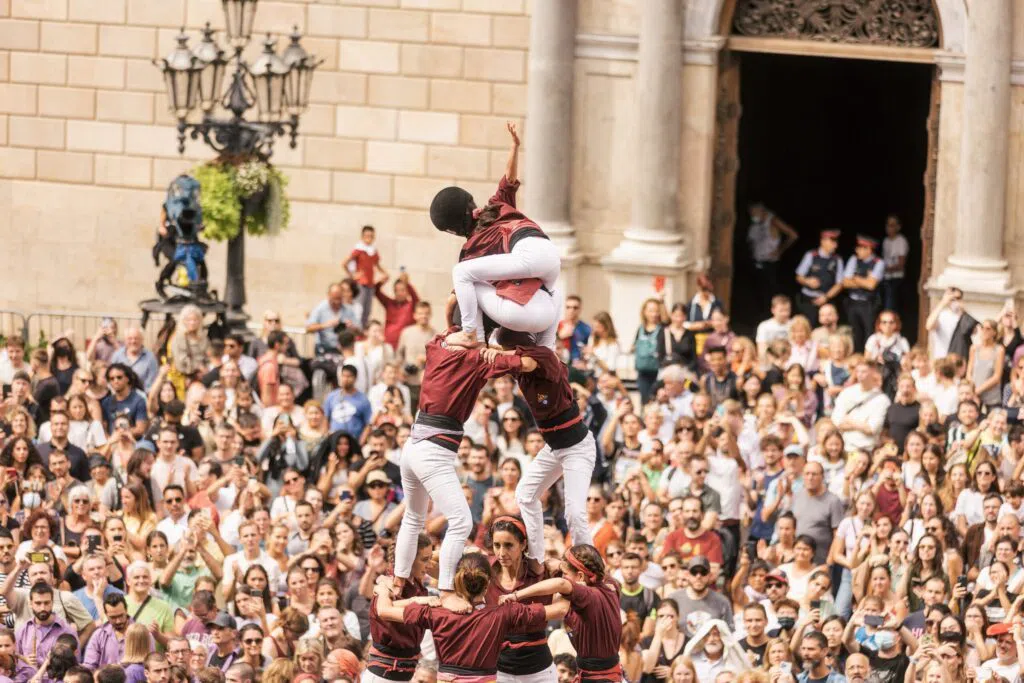
Watch long enough in Plaça de Sant Jaume and the crowd itself seems to build a second wall around the human one — canvas-black waists cinched by long sashes, children in white shirts passed hand over hand toward a summit ten or twelve metres up, a band playing the same rising melody it has played for two centuries. This is casteller: a Catalan invention of trust and counterweight, built entirely from bodies, and Barcelona trains for it year-round in halls you can simply walk into. You do not need a ticket, an app, or a stroke of luck to see one fall together and, more often than the drama suggests, hold. You need a square, a Sunday, and to know where to stand.
What a Castell Is, and Why Barcelona Still Builds Them
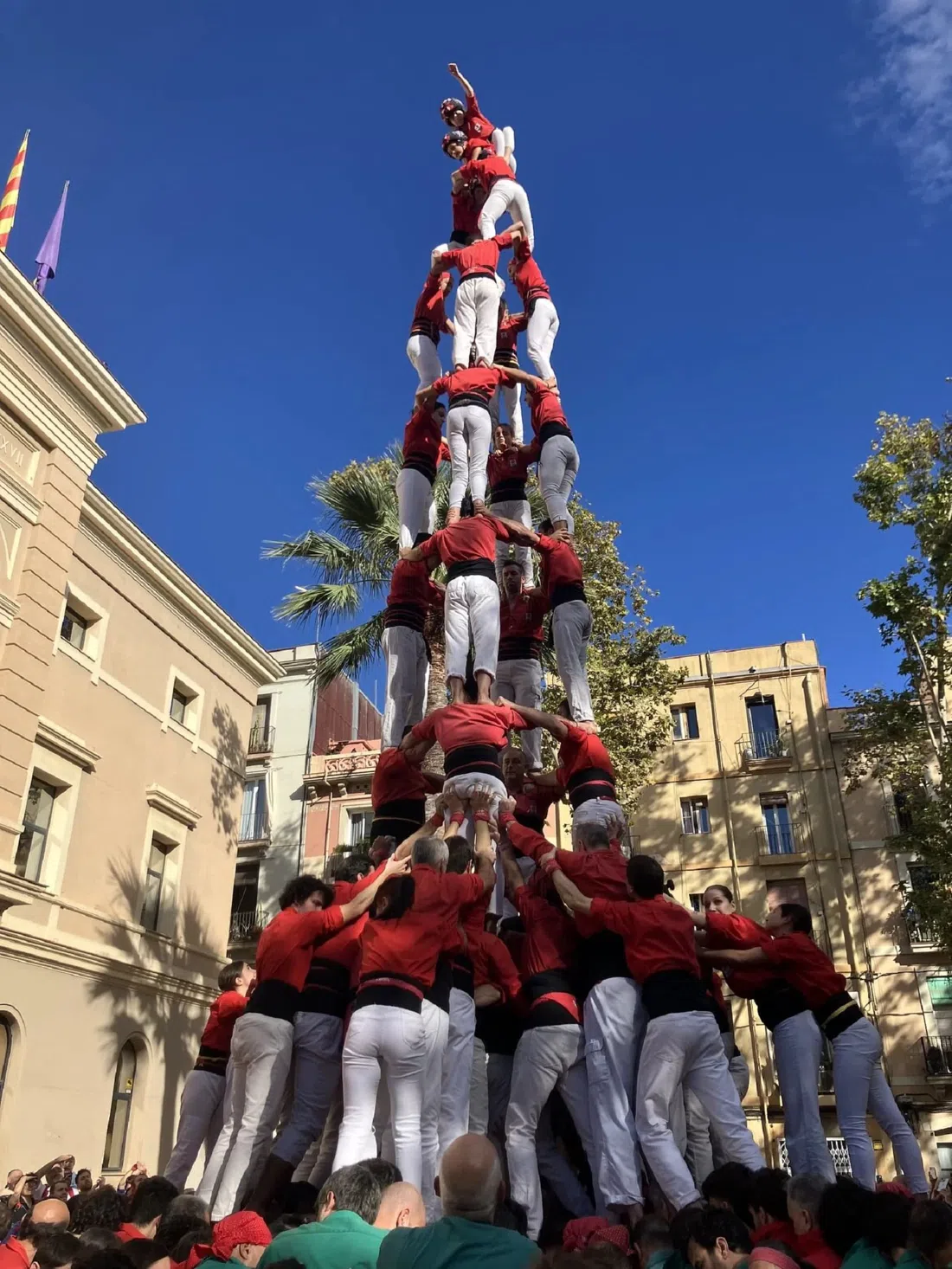
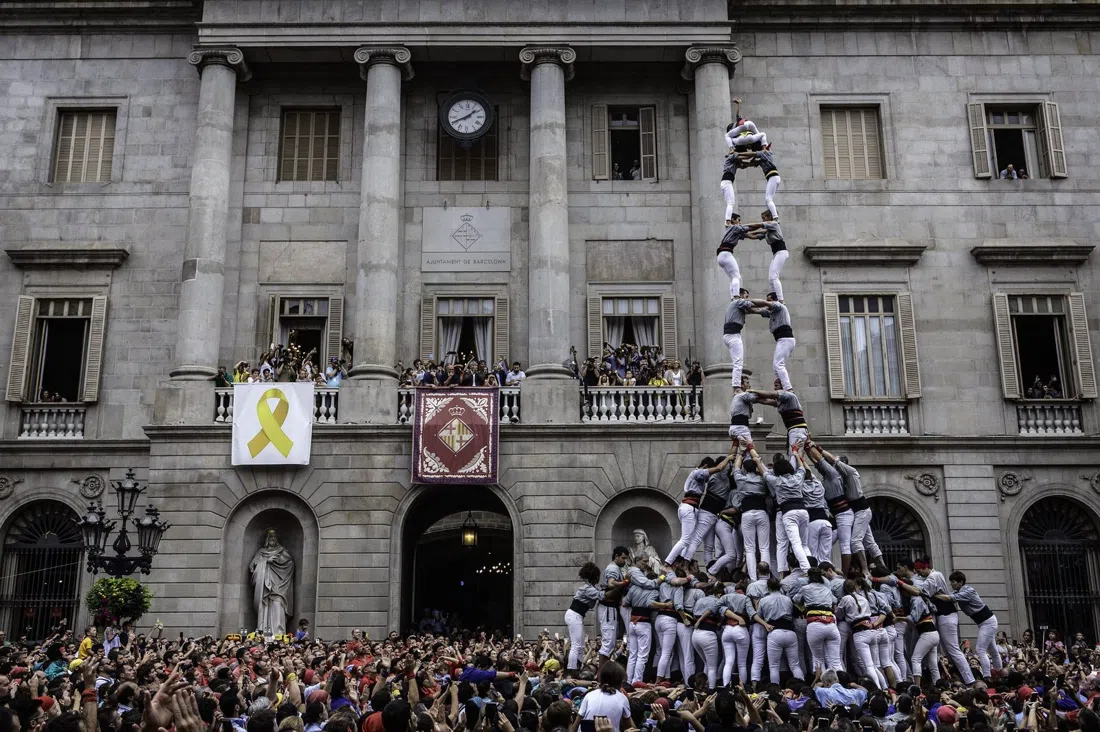
A castell is a human tower, built and dismantled in front of a crowd in a matter of minutes. It starts with the pinya — a dense, shoving mass of people packed into the base, arms locked, absorbing weight and cushioning any fall. From that base a column climbs, storey by storey, thinner bodies replacing thicker ones the higher you go, until a child (the enxaneta) scrambles up the outside and raises a hand to signal the tower is complete. Then it comes down, which is the harder half. The tradition began in the countryside south of Barcelona and is now recognised by UNESCO as intangible cultural heritage, but it has never been a museum piece — it is a living, competitive, faintly obsessive hobby practised by teams called colles, several of which train inside the city limits.
The senior reference colla of the city is Castellers de Barcelona (city-wide, no single home square), founded to give the capital its own team at a time when the tradition was still mostly a Tarragona-province affair. They usually lead or host the big civic diadas in the old town, and their 2026 anniversary diada is scheduled for 21 June — worth checking against the council calendar if you're building a trip around a fixed date.
Plaça de Sant Jaume: Barcelona's Big Civic Stage
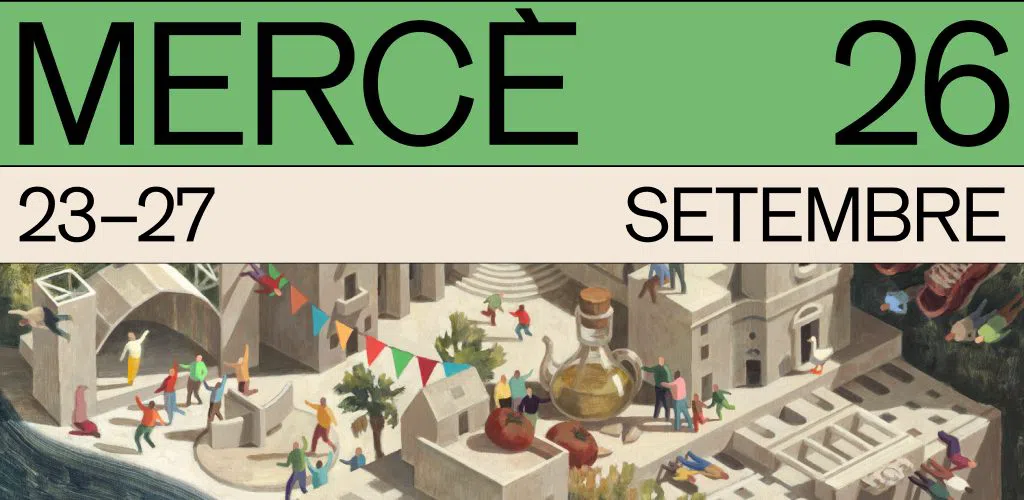
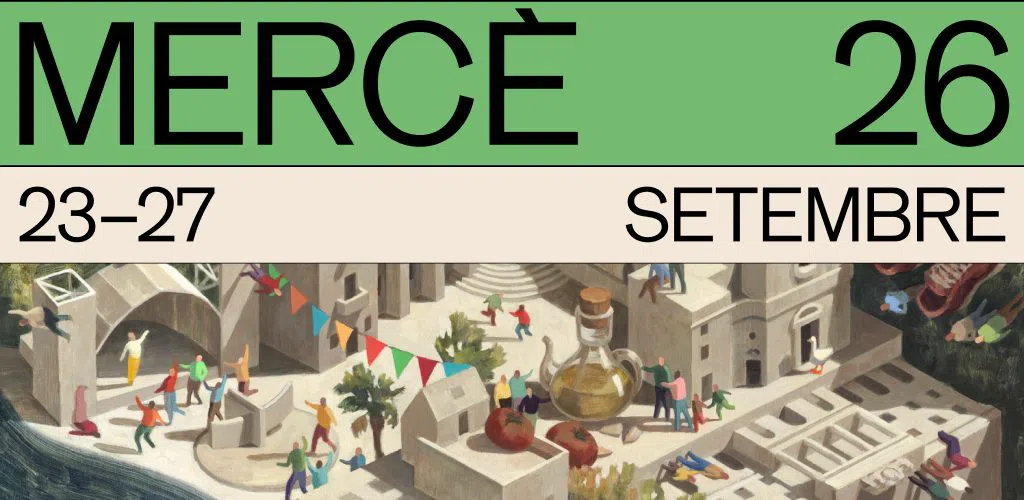
Plaça de Sant Jaume (Barri Gòtic) is where the city puts its castellers on its most important stage — the square between the Generalitat and the city hall, used for every civic occasion that matters. In 2026 that means the Santa Eulàlia diada on 15 February and the La Mercè castellers gathering on 24 and 27 September, both confirmed on the council's own calendar. It's free, standing, open-air, and there is no booking system to game — which is both the appeal and the catch. This is the most photographed casteller square in the city, so the good sightlines fill early: come for a morning diada and you want to be in position the best part of an hour and a half ahead, not fifteen minutes. Groups don't need to book anything either — just arrive together and claim your patch of cobbles as one unit, because once the crowd sets, moving through it is slow and generally frowned on mid-tower.
Stand with your back to the Generalitat and you get the tower rising against the government palace's stone facade, which is the classic frame. Stand nearer the Casa de la Ciutat side and you're closer to the pinya, which is louder, sweatier, and arguably more interesting if you want to watch how the base actually holds a tower up rather than just admire the silhouette against the sky.
Where the Real Atmosphere Is: Neighbourhood Festival Squares
The old-town diadas are the ones visitors find first, but the neighbourhood festa major squares are where castells feel like what they actually are — a community sport, not a tourist set piece. None of these need booking either; they're built into the free, open street-festival calendar each district runs every year.
Festa Major de Gràcia
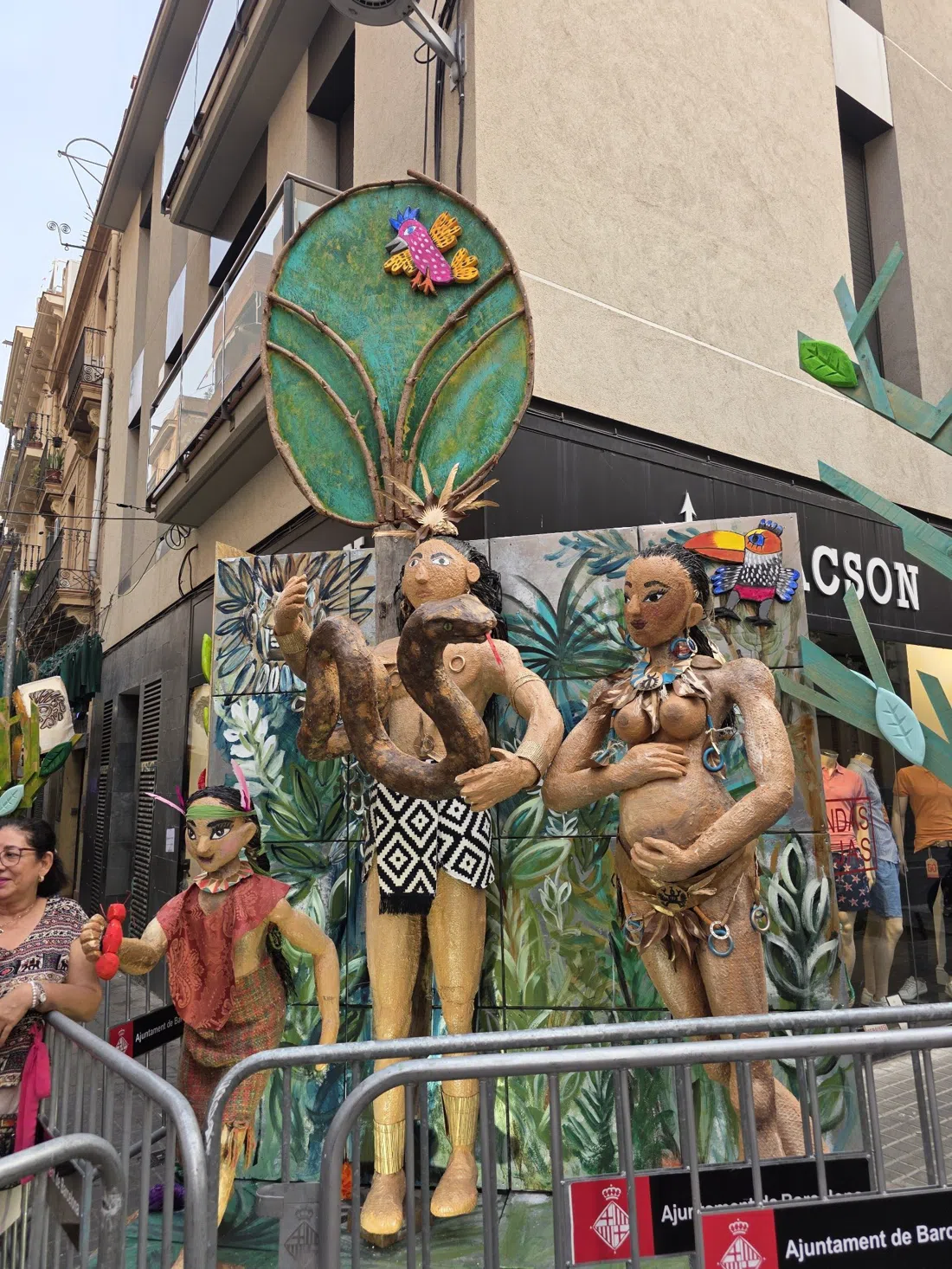
Festa Major de Gràcia at Plaça de la Vila de Gràcia is the pick if you only have one afternoon and want the least touristy square on this list. The week-long Festes de Gràcia runs 15–21 August 2026, and 16 August is the neighbourhood's dedicated Castell Day — a date the district builds its whole festival programme around. It's free standing room, groups are fine, and the streets around it are famously decorated by residents' associations competing on themed installations, so budget time to wander before or after the towers go up. Get there early; Gràcia's squares are small and this is now one of the best-known Castell Days in the city.
Plaça del Pi
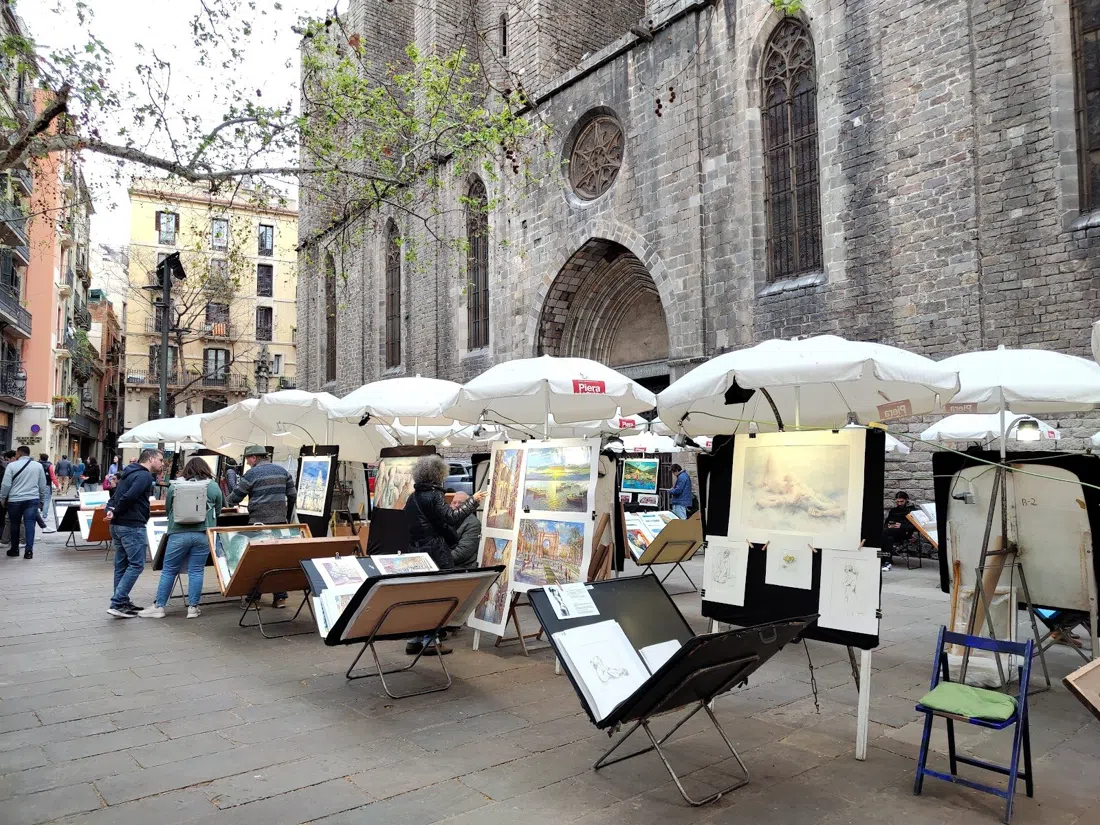
Plaça del Pi (Barri Gòtic) hosts a confirmed diada castellera at 17:00 as part of the Festes de Sant Josep Oriol, running 14–23 March 2026. This is a good family pick — free, open-air, with visiting colles from outside the city (Castellers de Barcelona and Bordegassos de Vilanova among those confirmed) adding variety you don't get at a single-colla show. The catch is size: this is one of the prettiest small squares in the Gothic Quarter, church front and all, and it fills fast. If photographs matter to you more than being right against the barrier, arrive early and stake a spot with a sightline to the church steps rather than fighting for the front row.
Festa Major de la Barceloneta
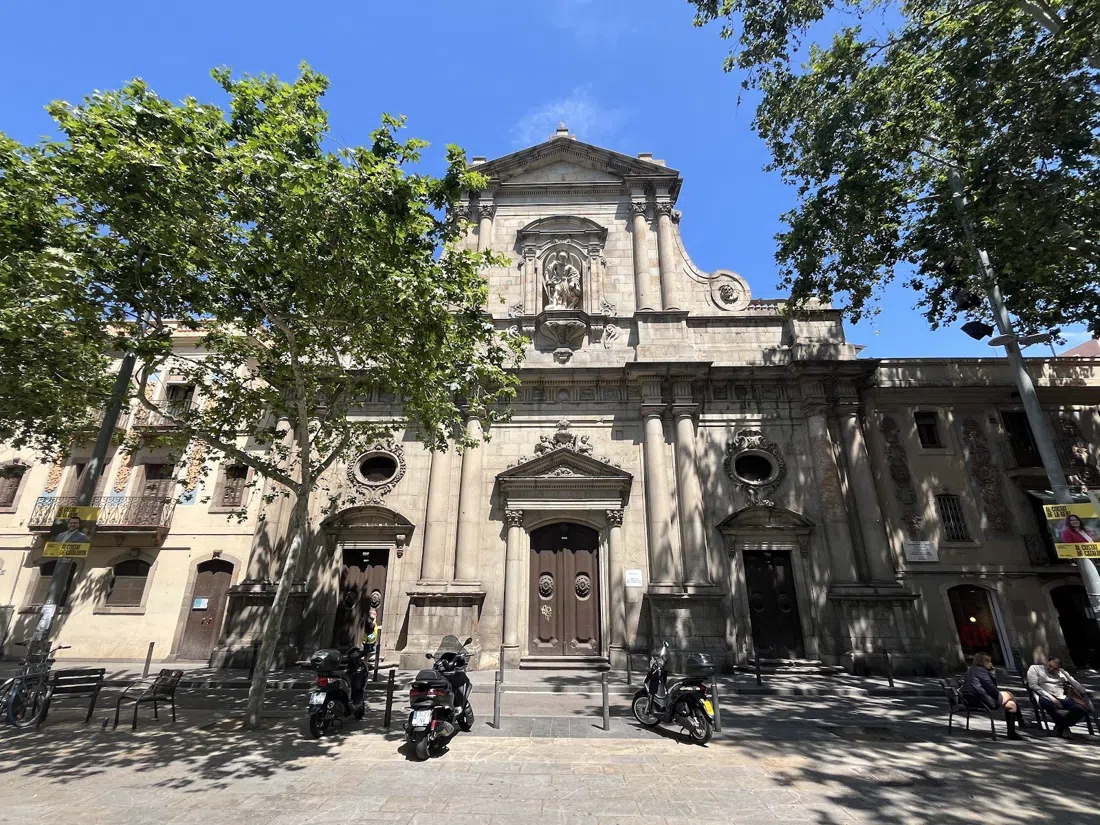
Festa Major de la Barceloneta at Plaça de la Barceloneta is the near-the-beach option, and worth building a day around if you want to combine sand with towers. Castellers de Barcelona performed here on 16 May 2026, and the neighbourhood's own Festa Major — which starts the Thursday before 29 September — regularly folds a castells slot into a programme that also runs a correfoc (fire-run) and a cannon parade. It's free and open-air; go for the whole afternoon rather than timing your arrival to the minute, since the castells slot sits inside a longer street-festival programme, not a standalone show.
Castellers del Poble Sec
Castellers del Poble Sec (Poble Sec), based at Can Bandarra, hold their public diada during the ten-day Festa Major del Poble-sec, 17–26 July 2026, below Montjuïc. This is a genuinely local, non-touristy option — the confirmed 2026 line-up includes guest colles Minyons de Terrassa and Matossers de Molins de Rei, which means you get a proper multi-team diada rather than a single colla's solo effort. Rehearsals here are also open to onlookers outside festival dates, so if your trip doesn't line up with the Festa Major, it's still worth a walk past on a training evening.
Go Behind the Curtain: Watch a Colla Train
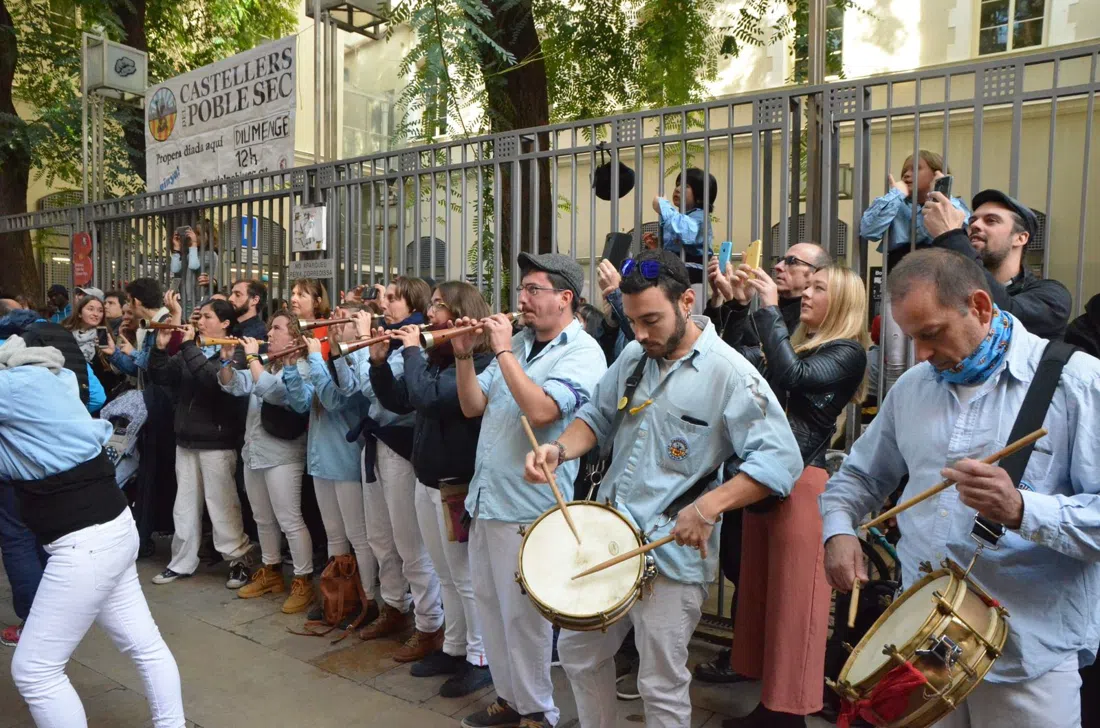
Most visitors only ever see the finished six minutes — tower up, tower down, applause. If you actually want to understand how a castell gets built, the one entry on this list built for that is Can Musons (Gràcia), the rehearsal hall of Castellers de la Vila de Gràcia. This is the colla that explicitly welcomes visiting groups: a guided visit starts with a short video explainer, then descends to watch the actual training in silence, close enough to see how the base is packed and how the upper storeys are talked up and down. Open rehearsals run Wednesday 19:30–22:30 and Friday 19:30–23:00, and first-timers are told to arrive after 20:00 rather than right at the start. It's free to watch, and organised group visits are arranged directly with the colla rather than through any third-party booking system — email ahead if you're bringing a group larger than a couple of people, both as a courtesy and because training space is genuinely tight.
This is the pick for anyone who finds the finished tower slightly abstract — the six minutes on a festival square don't show you the shouted counts, the shoulder-checking, the sheer amount of quiet coordination that a public diada compresses into something that looks almost effortless.
Meet the Teams: Colles Across the City
Beyond the old town and Gràcia, several colles train and perform in neighbourhoods most visitors never reach — worth the detour if you want a sense of how widespread this actually is, or if your festival dates don't line up with the squares above.
Castellers de Sants (Sants), known as the Borinots and based at Cal Borinot, are one of the city's strongest sporting colles, with regular attempts at nine-storey towers and folres (a wider, reinforced structure). Rehearsals and their annual diada are open-air and public with no booking needed; the diada runs during the Festa Major de Sants in August 2026. If competitive height is what draws you to castells, this is the colla to prioritise.
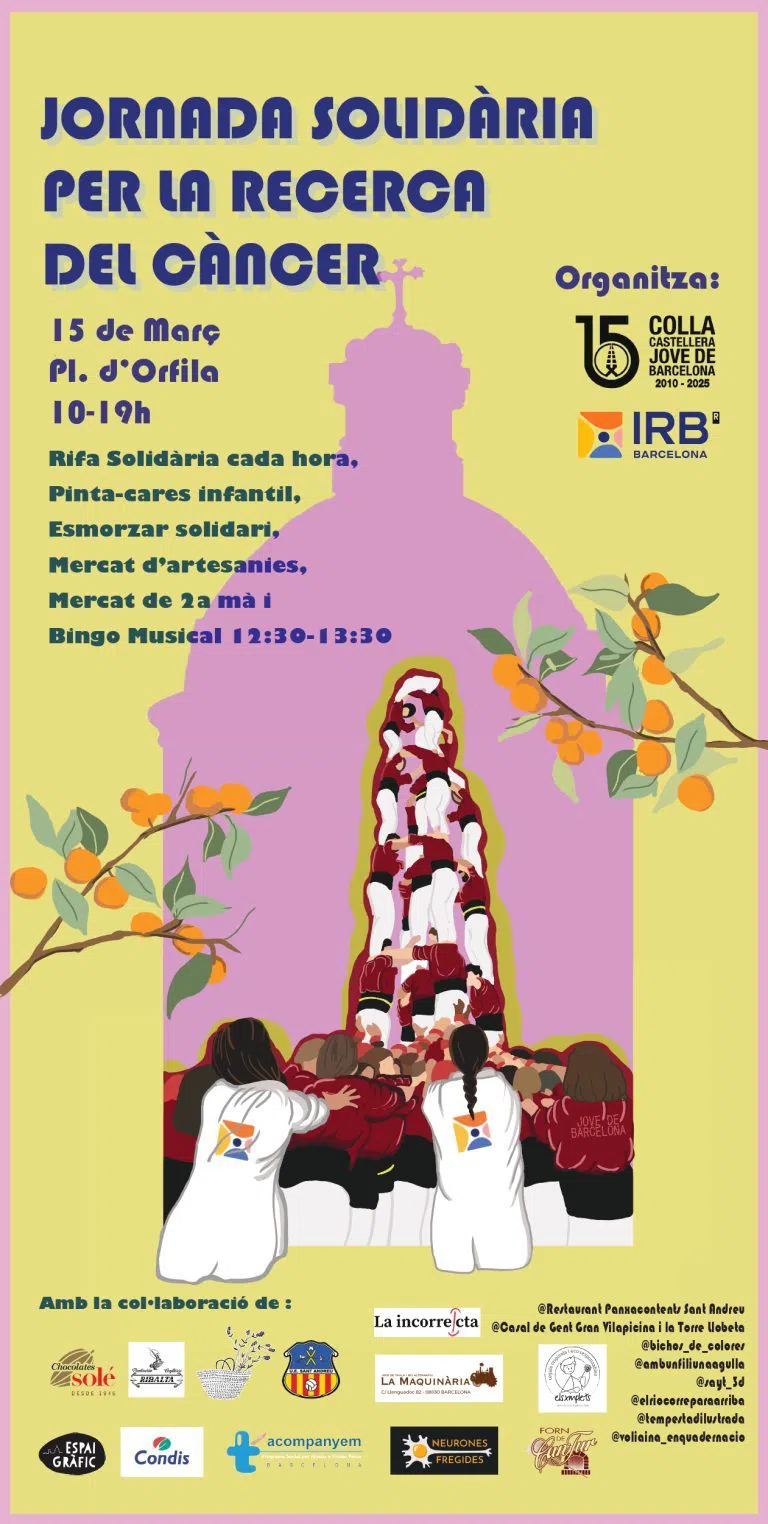
Colla Castellera Jove de Barcelona (Sant Andreu), based inside the striking industrial-heritage Fabra i Coats complex, trains Tuesday and Friday from 19:00 and welcomes onlookers. Founded in 2010 specifically to shake off the tradition's older, more closed image, it has a younger, more informal feel than the founding colles — contact the colla via their site if you're bringing a group. The building alone, a former textile factory turned cultural centre, is worth the trip out to Sant Andreu on its own merits.
Castellers de Sarrià (Sarrià) are the underdog story on this list: the city's newest and smallest colla, refounded in 2016 and still building toward its first regular eight-storey castells. Their public diada runs during the Festa Major de Sarrià in October, and rehearsals are visible from outside. Go in with the right expectations — towers here are genuinely lower than at Sants or Castellers de Barcelona, and that's the point of watching them: this is what the tradition looks like while it's being rebuilt from nothing, not after two centuries of institutional muscle memory.
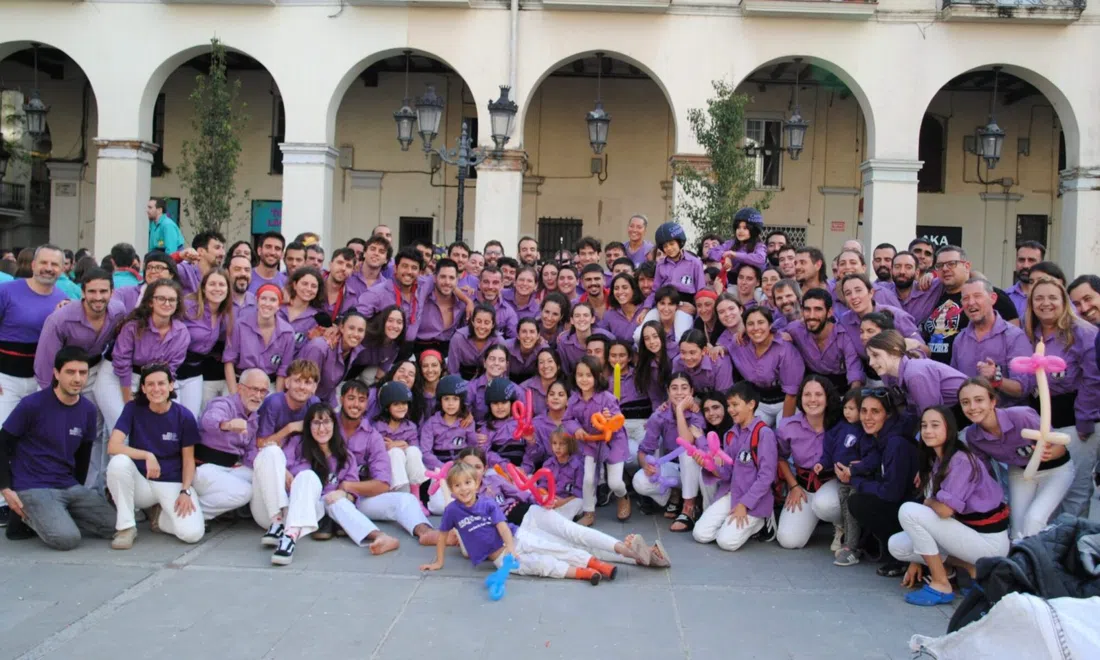
Colla Castellera de l'Esquerra de l'Eixample, known as the Esquerdats (Esquerra de l'Eixample), is the youngest colla on this list, founded in 2018. They train Wednesday and Friday 19:30–21:30, and visitors can watch from the centre of the room. Their rehearsal venue is a former prison building, which makes for one of the more striking visual backdrops of any colla in the city — worth knowing before you go, since the contrast between the setting's history and what happens inside it is not something you'd guess from the street.
Planning Your Visit: Transport, Cash, Timing, Budget
Every venue on this list is free — there is no ticketed casteller experience worth recommending in Barcelona when the real thing happens on a public square for nothing. Bring cash anyway, not for entry but for the festival stalls that inevitably ring these squares during a festa major.
Transport: Plaça de Sant Jaume and Plaça del Pi sit inside the Barri Gòtic, walkable from Jaume I or Liceu metro (L4/L3). Plaça de la Vila de Gràcia is a short walk from Fontana or Diagonal (L3). Plaça de la Barceloneta is served by Barceloneta metro (L4). Can Bandarra and the Poble Sec festa are near Poble Sec or Paral·lel (L3/L2). Fabra i Coats (Sant Andreu) and the Sarrià and Esquerra de l'Eixample rehearsal spaces are further out — allow 25–35 minutes from the old town and check the last metro time if you're going for a late Friday rehearsal.
Timing: for any diada on a named festival square, arrive 60–90 minutes early if you want a real sightline — these are free events with no capacity cap, which means the crowd, not a door policy, decides how close you get. For rehearsal visits (Can Musons, Fabra i Coats, the Esquerdats), arrive at or just after the stated start time; showing up mid-session to watch training in silence is normal practice, not rude.
Budget: zero entry cost across every venue on this list. The only spend is festival-square food and drink, which runs the same as any street-festival stall in the city — a few euros for a beer or a pastry, nothing that needs planning for.
Groups vs couples: the festival squares (Sant Jaume, Gràcia, Pi, Barceloneta, Poble Sec) work fine for groups of any size — you just need to arrive together, since splitting up in a filled square makes regrouping difficult. The rehearsal-hall visits are the opposite: Can Musons and the Esquerdats explicitly ask larger groups to arrange visits directly with the colla in advance, out of courtesy to a working training space rather than a formal booking requirement.
If you're building a longer stay around the festival calendar, start from the Barcelona guide for the wider city picture, and sort accommodation near whichever neighbourhood hosts your target diada via Barcelona hotel search — Gràcia and the Gothic Quarter both get noisy and busy during their respective festa major weeks, which is either exactly what you want or a reason to book a night or two further out and walk in.