
The queue outside is all noise and carved stone. Then the door shuts behind you, the sound drops to a hum, and you look up into columns that split into branches halfway to the ceiling, lit green and blue down one flank and red and orange down the other. Gaudí wanted a forest and he built one, and no photograph has ever handed that over in advance.
What you are actually standing in
The Basílica de la Sagrada Família (Sagrada Família, in the eastern half of the Eixample grid) is usually sold on its exterior, which is the least interesting way to meet it. Come in through the Nativity side, take ten paces, and stop. The columns around you are not Gothic piers with ornament stuck on. Each one is shaped like a trunk, twisting as it rises so that it divides into limbs well below the vault, spreading its load sideways before anything reaches the roof. Stand with your back to the apse and look straight up through the crossing: the ribs read as a canopy, the pierced vaults as gaps of sky in it. People go quiet in here, less from piety than from watching a ceiling behave like weather.
The glass is tuned to the hour. The eastern wall, behind the Nativity façade, runs through greens and blues and is at its strongest in the first two hours after opening, when the colour lies across the floor in long bars. The western wall, behind the Passion façade, holds the reds and oranges and only wakes up in the late afternoon. The same nave is two different rooms at 09:30 and at 17:30, and if you only have one slot, that choice matters more than which ticket tier you buy.
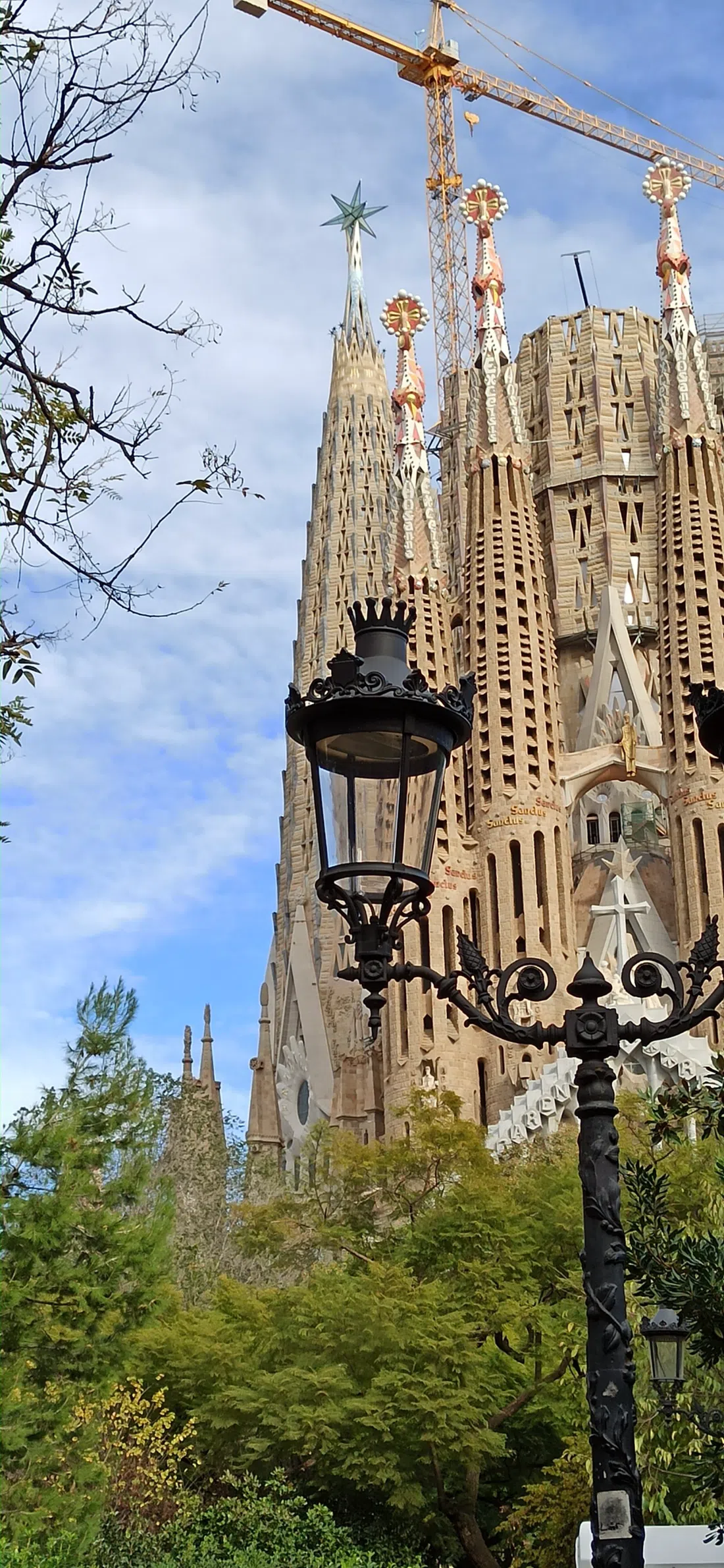
Outside, the two finished façades argue with each other. The Nativity front is Gaudí's own, the one he saw built, crawling with turtles, lizards, musicians and foliage until the stone looks grown rather than cut. The Passion front, carved much later, is deliberately stripped and angular, and its gaunt, bone-hard figures strike plenty of visitors as a mistake. They were meant to feel like a different kind of day.
The central tower was topped out on 20 February 2026 and inaugurated on 10 June 2026, which makes this the tallest church in the world. The Glory façade and its great staircase, the intended main entrance, are still unbuilt. Finished here means topped out, not complete: you will still walk past hoardings, and cranes still stand over the site.
The workshop nearly everyone walks past
Downstairs, under the Passion façade, the Sagrada Família Museum (inside the basilica, no separate ticket) is included in every entry and treated by most visitors as a corridor to the exit. Give it twenty-five minutes instead of five. It shows how Gaudí worked: instead of drawing elevations, he built plaster models and hung chain models upside down to find the line a load wants to take, then photographed them inverted. Once you have seen the models, the nave above reads as a structure you can follow rather than just a spectacle. The corridors are narrow, so go in twos and threes; a party of thirty turns it into a bottleneck.
Whether to pay for a tower
The tower lift is the standard upsell, and it is honest about what it gives you: a lift up one of the façade towers, a close look at the pinnacles and the mosaic fruit, then a descent on a tight spiral stair. You do not get the nave from above, and you do not see the new central tower, because you are standing on it. Check the age limit on the tower ticket as you book, skip it if stairs or enclosed heights are a problem, and know that you are buying texture at arm's length, not a panorama.
If what you want is the finished silhouette from the outside and at height, Mirador Torre Glòries (Glòries, about fifteen minutes on foot) does that job better for €18 to €21, or €22 to €25 with the Cloud Cities installation inside. Groups are accepted. Cloud Cities is ages eight and up and under-13s need an adult with them, which splits a mixed-age family. It closes on Tuesdays from 16 October to 31 March.
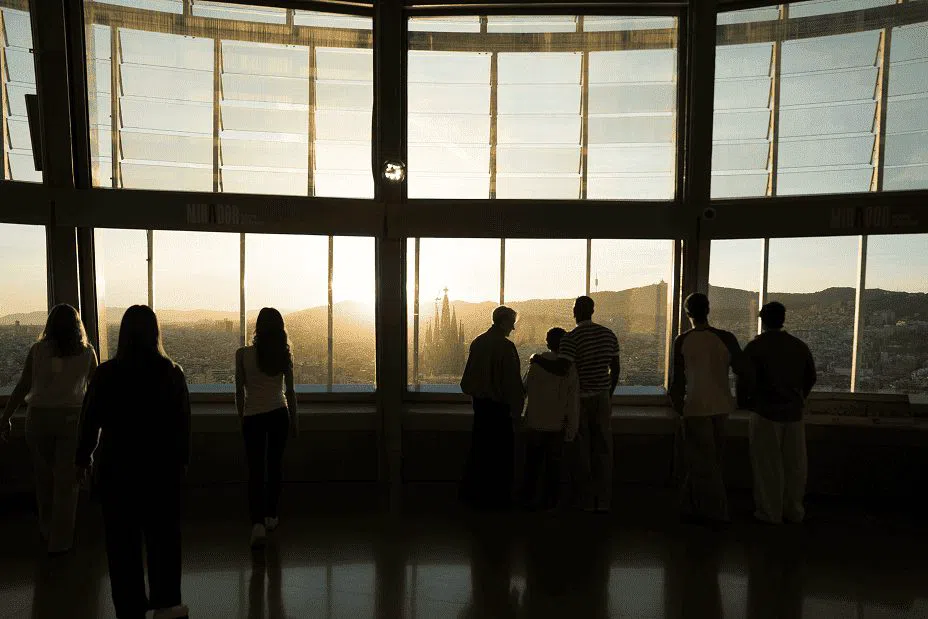
How long you need, and when to walk in
Ninety minutes is the honest floor: an hour in the nave and around both façades, then the museum. Add about forty-five minutes if you have tower access, including the wait at the lift. Two and a half hours covers it comfortably, with time to sit down inside, which you should do at least once.
The first slot of the day is the quietest and the eastern glass is at its best then. The last ninety minutes before closing is the second-best trade: fewer people, warmer western light, and nothing to rush to afterwards. Midday gives you the worst of both, hard overhead sun and the heaviest footfall. Midweek beats weekends. It is a working basilica, so services can close sections of it, and the site publishes the schedule before you book.
Tickets, and the queue that is not really a queue
There is no ticket window to gamble on. Entry is online only, on a timed slot, so the line you see outside is people with tickets waiting for their time. Turning up hopeful is the one strategy that reliably fails.
Direct, €26 buys entry with the audioguide app. €30 puts a live guide in front of you. €36 is entry with the tower lift, €40 is a guide plus towers, and under-11s go free. General bookings are capped at nine people, so a family of ten is two reservations.
Guided groups are handled separately, through their own entrance on carrer de la Marina, up to thirty people per tour, with a school rate from €15 per person. Book that lane if you are more than nine, and do not try to funnel a coach party through general entry.
The third-party route has real volume behind it: around 45,522 traveller reviews sit across the bookable tours at this attraction, and the guided options run seven days a week. Full-day combinations that bundle the basilica with other Gaudí sites and a pickup start from about 115 USD per person. If you only want in, buy direct and read the museum properly. If you want the symbolism talked through, or the day planned around you, pay for the guide.
What the door expects of you
Arrive ten to fifteen minutes before your slot, not forty. Bags go through a security check and large ones are a problem. The audioguide is an app, so charge your phone and bring your own headphones. It is a consecrated church: shoulders and knees covered, no beachwear. Flash and tripods belong outside.
The best views here are free
Plaça de Gaudí (Sagrada Família, the park on the Nativity side) is where the reflection shot comes from, and the pond is at its stillest at sunrise and again at blue hour. The Carrer de la Marina works that link it to the Nativity steps were finished in June 2026, so there is finally room to stand back. There is no door policy, but the good angle is a narrow strip of path and it fills fast.
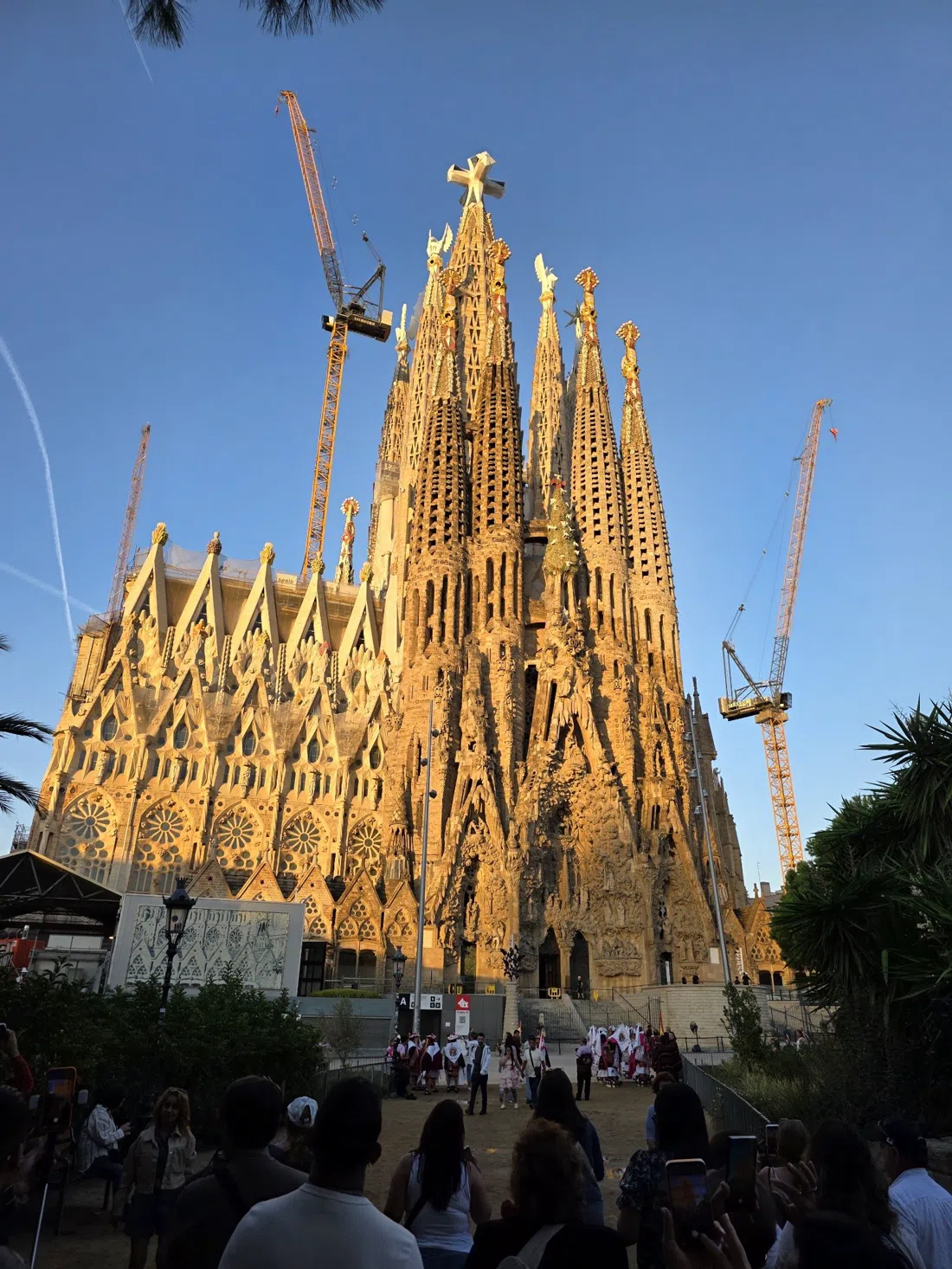
On the other side, Plaça de la Sagrada Família (the local square facing the Passion façade) is the better place to read that hard, bone-like sculpture, and the benches and shade make it the sane place to wait out a timed entry without buying a coffee you did not want. Tour leaders assemble their groups here, and you should assemble yours here too.
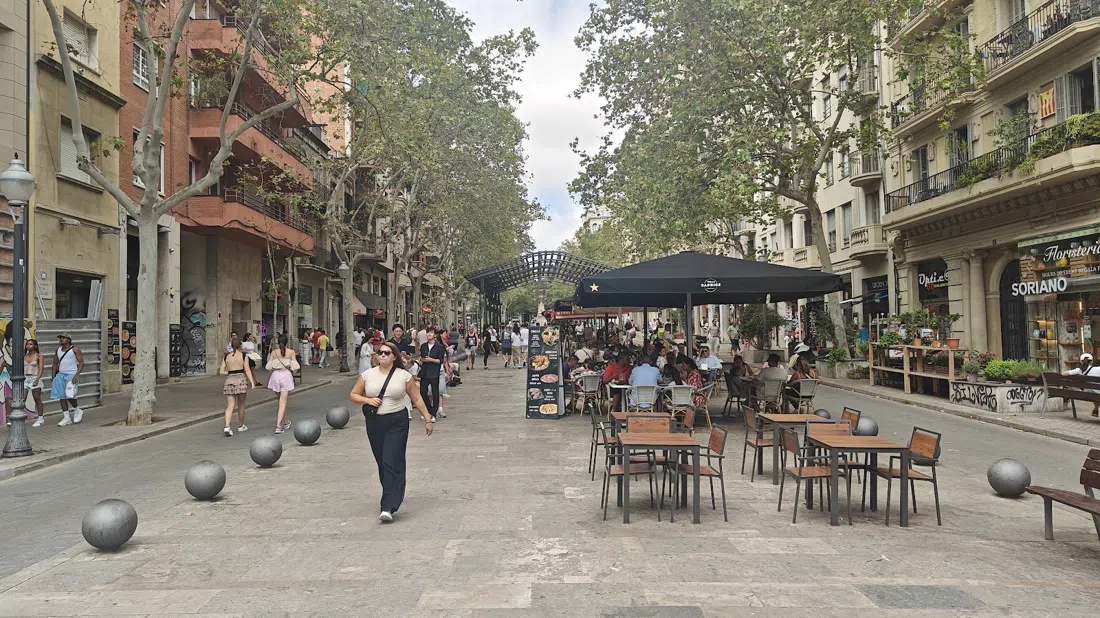
From there, walk Avinguda de Gaudí (Sagrada Família, running north-east towards Sant Pau), a pedestrian promenade with terraces down both sides. Coffee is €2 to €3, a beer €3 to €5, and these are the most group-tolerant tables anywhere near the basilica. It is also the only stretch in the immediate area that still feels lived in.
Paid views, and what each one costs you
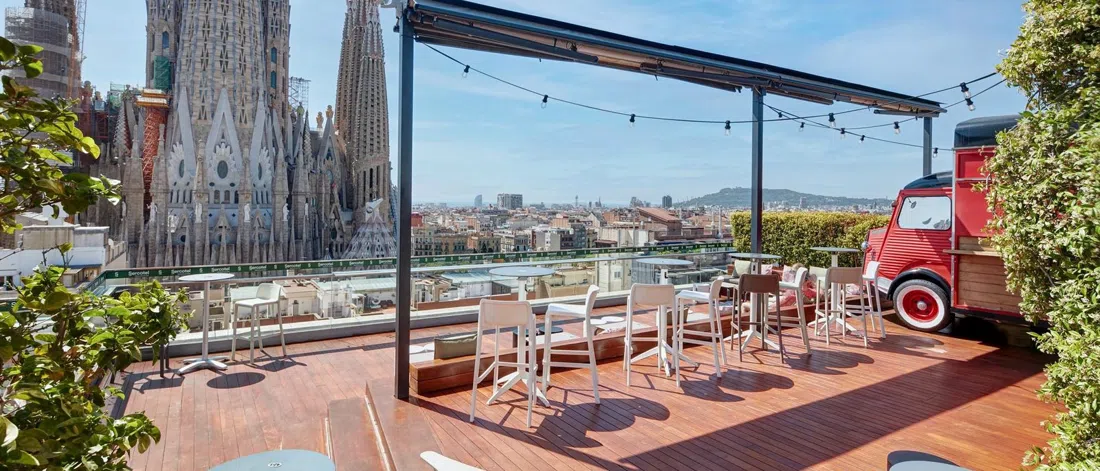
Terrassa del Rosellón (Sercotel Rosellón, two minutes from the basilica) is the closest paid view of the towers in the city, which is the appeal and also the catch. Reservations are required, the booking window opens fifteen days ahead, and your table is held for only fifteen minutes. Non-guests pay an access fee and there is a minimum spend, with cocktails and brunch roughly €12 to €25. Book the moment the window opens, or do not build your evening around it. It works for two or four and is useless for a party.
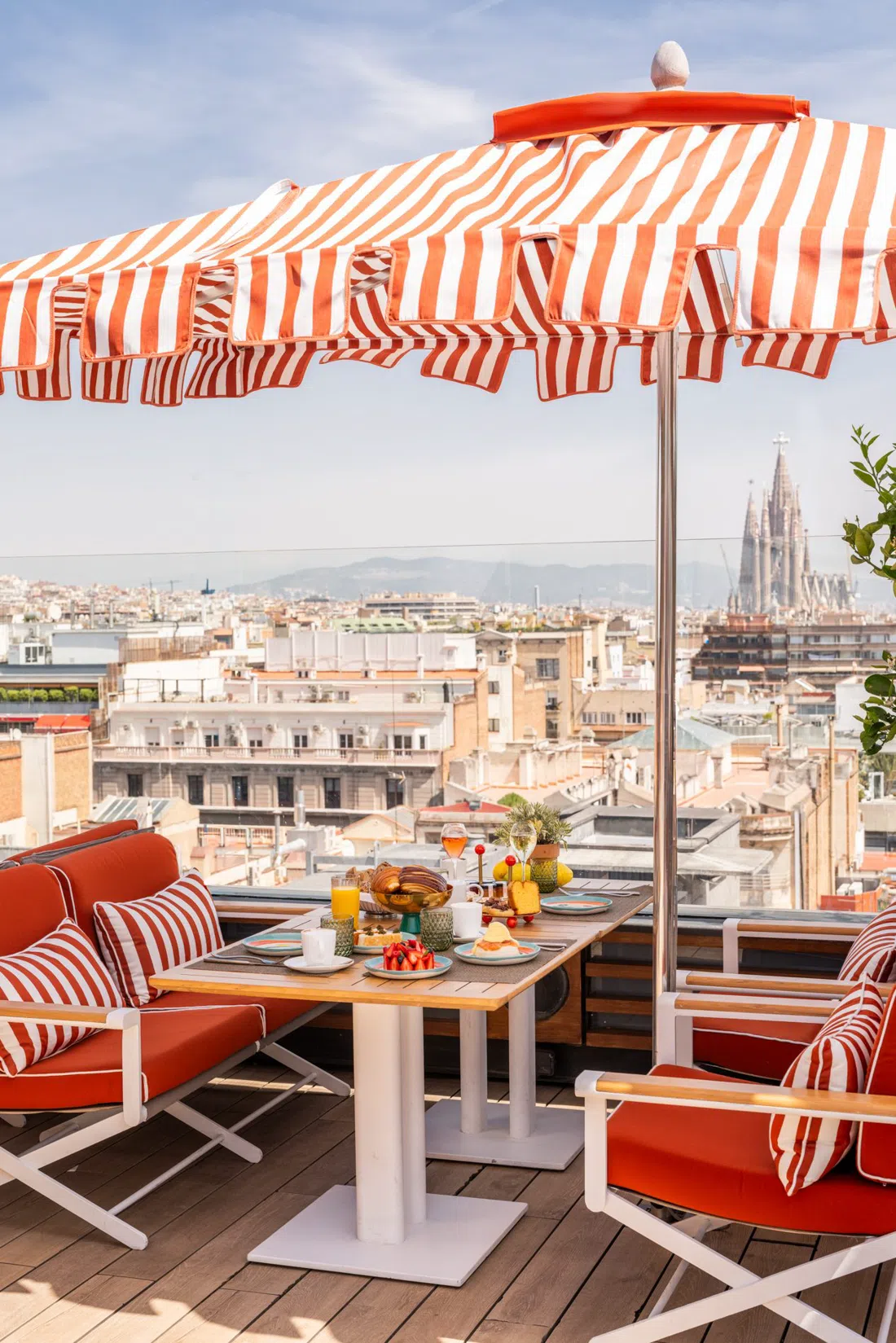
La Dolce Vitae (Majestic Hotel & Spa, Passeig de Gràcia) trades the other way. The basilica is small in the frame, but you get the whole city with it, non-guests are welcome, reservations are advised, large tables are possible, and it runs from breakfast through to late every day of the year instead of hanging on one slot coming free. Cocktails are around €18 to €22, and the Mediterranean à la carte sits well above that.
Coffee, lunch and a market the coaches miss
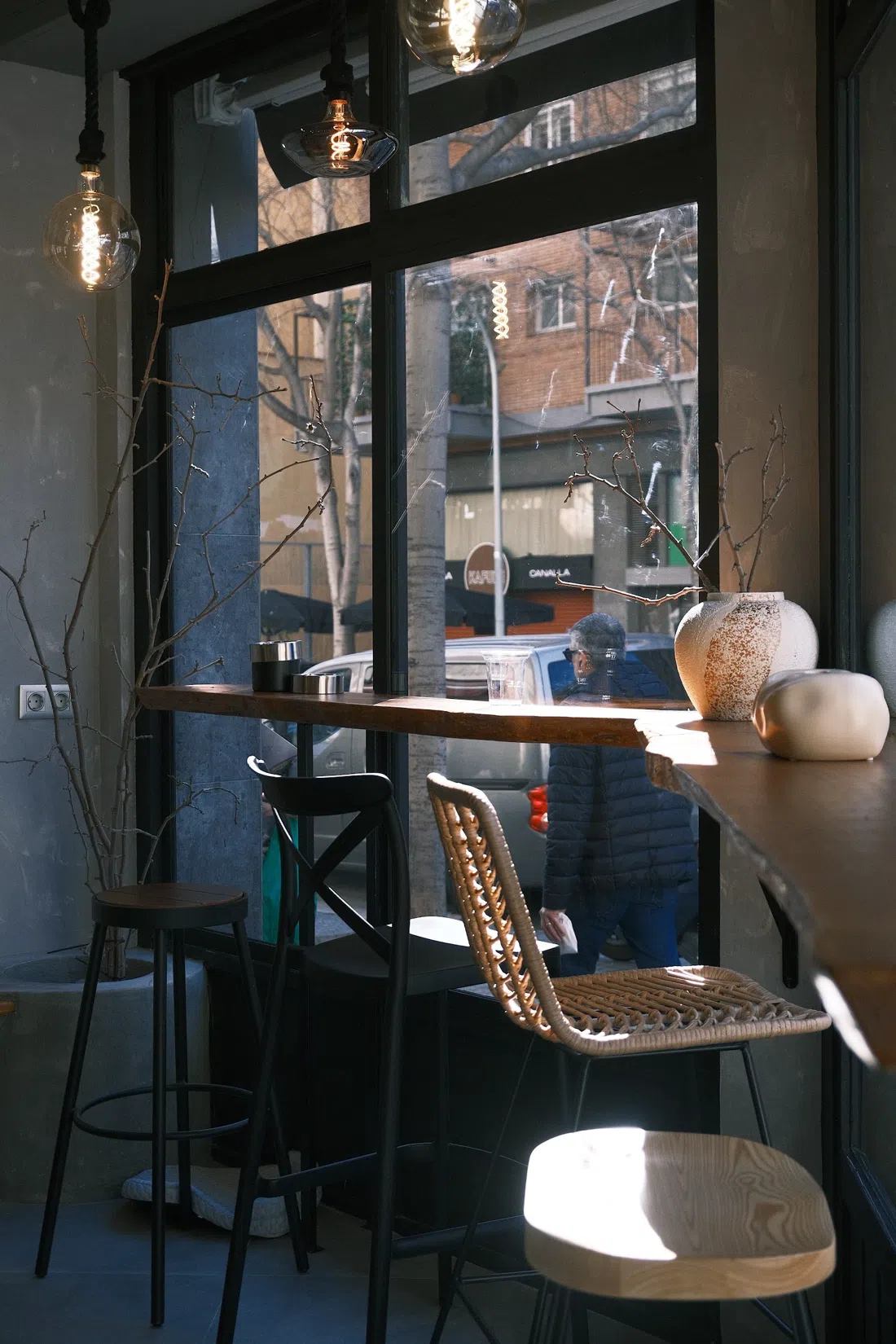
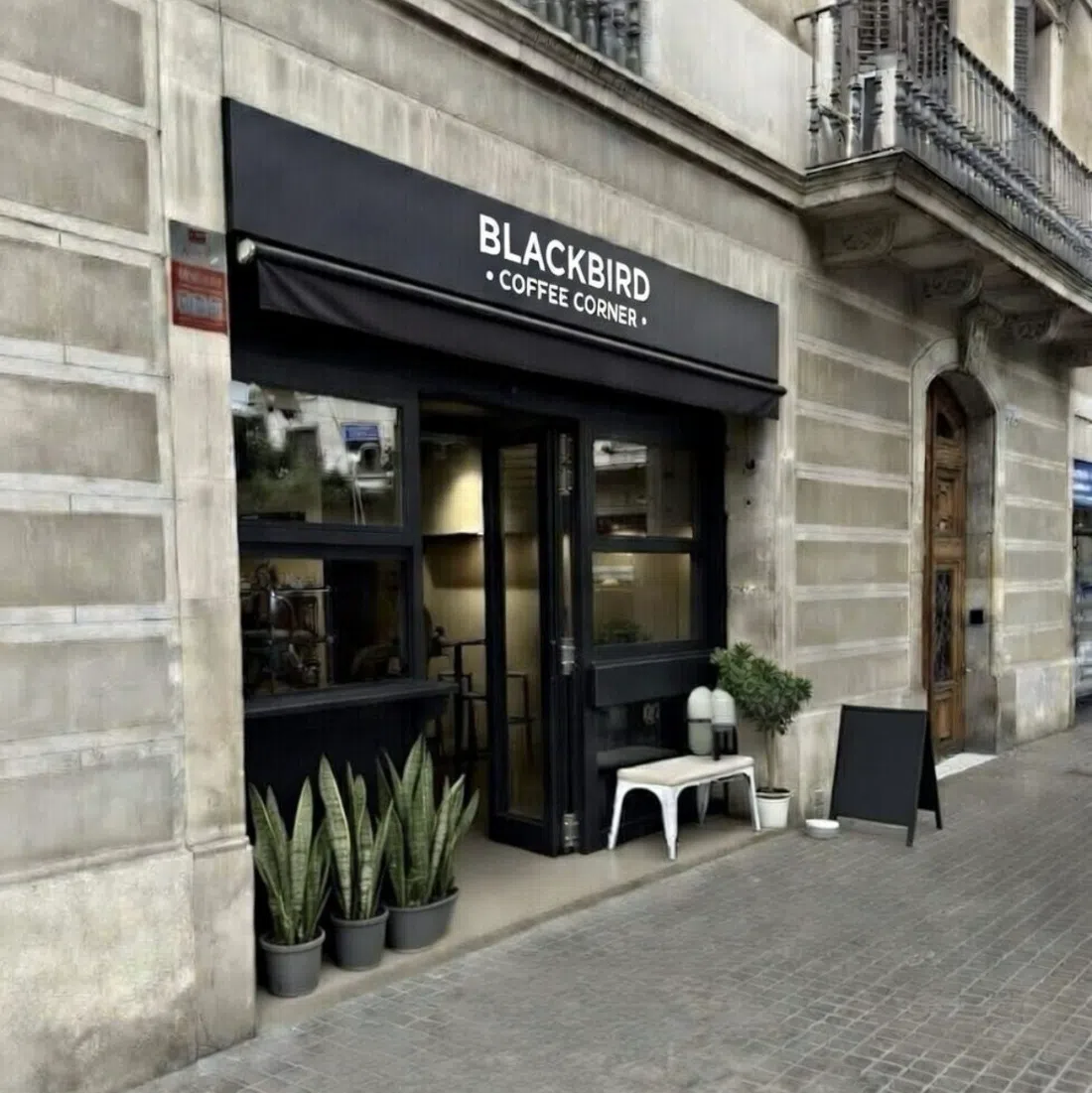
For an early slot, La Cherry Coffee Co. (Sagrada Família) is a third-wave roastery more than a sit-down café, tiny and takeaway-leaning, with coffee at €2.50 to €4.50 and beans €12 to €18. It closes at 16:00 and shuts at weekends. Blackbird Coffee Corner (Sagrada Família, a few streets off the basilica) does a properly made cup for €2.50 to €4 in a stretch otherwise owned by chains, open 08:00 to 18:00 on weekdays and 09:00 to 17:00 at weekends. Both seat four at a push. If coffee is not your drink, Mocha (Sagrada Família) is a small matcha bar, dogs welcome, €4 to €7 a drink and cake around €5, open daily 10:00 to 20:00, and calmer than anything else within sight of the Nativity façade.
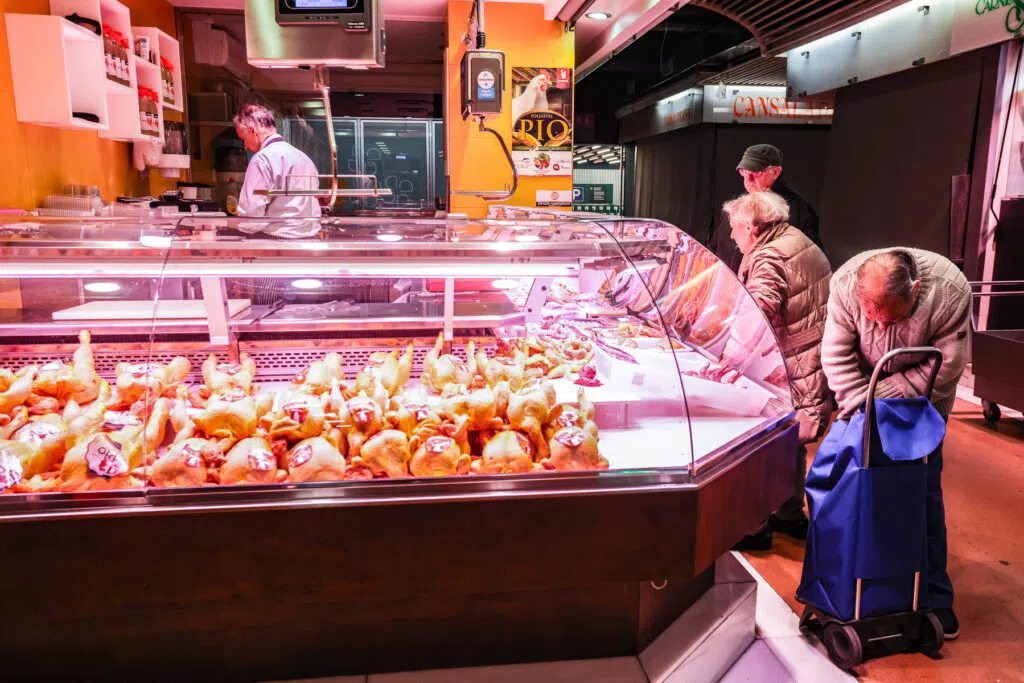
Two minutes from the basilica, Mercat de la Sagrada Família (Sagrada Família) is a covered market still doing the daily shop for the surrounding blocks. Go in twos and threes, because the aisles are working aisles. A bocadillo or a tub of olives costs a few euros. It closes on Sundays and shuts for the afternoon on Mondays, which catches people out.
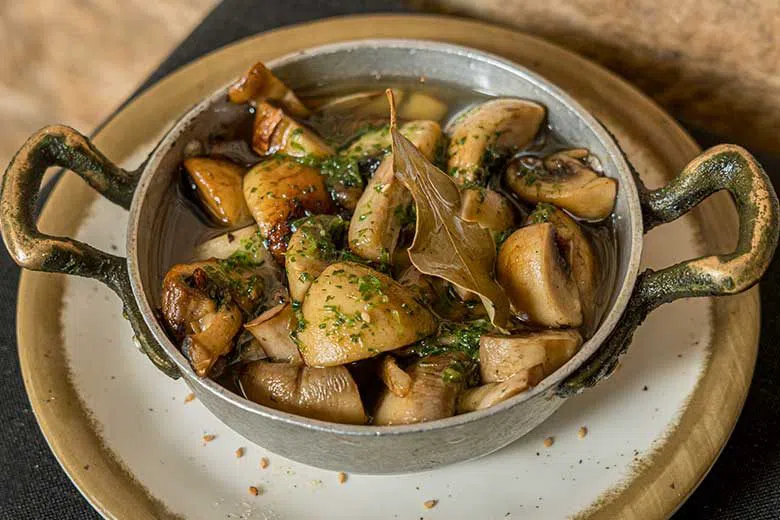
Feeding eight or more nearby means Gaudeix (Sagrada Família), which has a dedicated groups offer, a terrace with a view of the towers, no entrance fee and no reservation lottery. Tapas run €6 to €14, rice dishes and mains €15 to €25. It is a tourist-area restaurant, so order the paella and the tapas and do not expect a discovery.
Two modernista stops that earn the walk
Ten minutes up Avinguda de Gaudí, Sant Pau Recinte Modernista (Guinardó) is the largest art nouveau complex in the world and the strongest argument that Gaudí was not the only genius working this city. It never carries the basilica's crowd. Self-guided entry is €18 before 2pm and €17 after, €11.90 reduced, guided visits €21, and it is explicitly built for groups: 75-minute visits for up to thirty people at a flat €250 to €400. It is free on 23 April, 24 September and Museum Night, and sells combined tickets with La Pedrera.
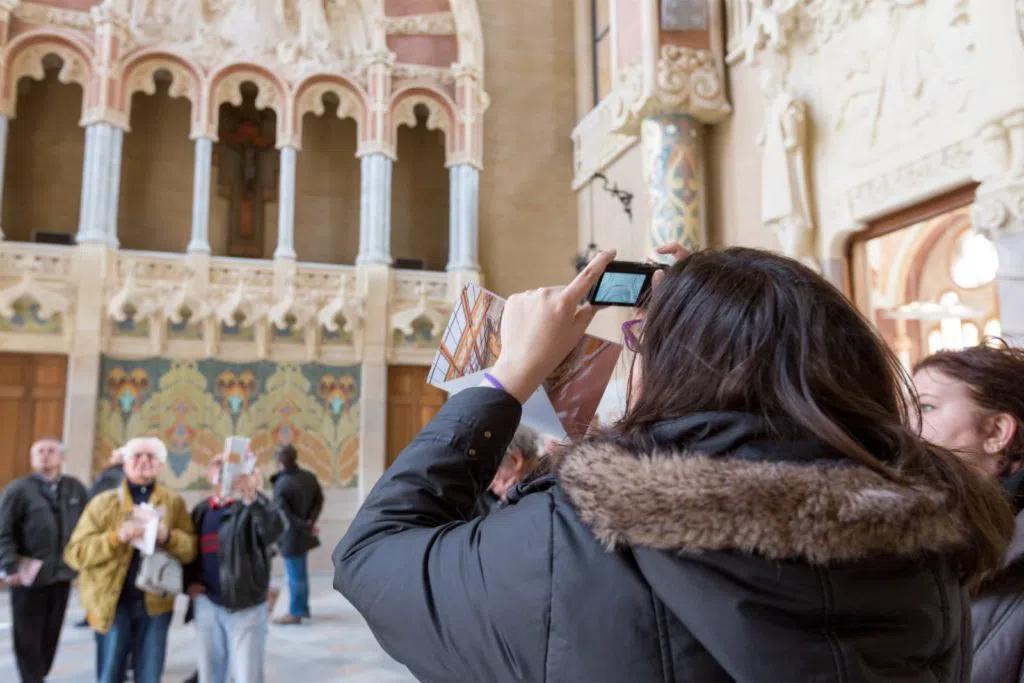
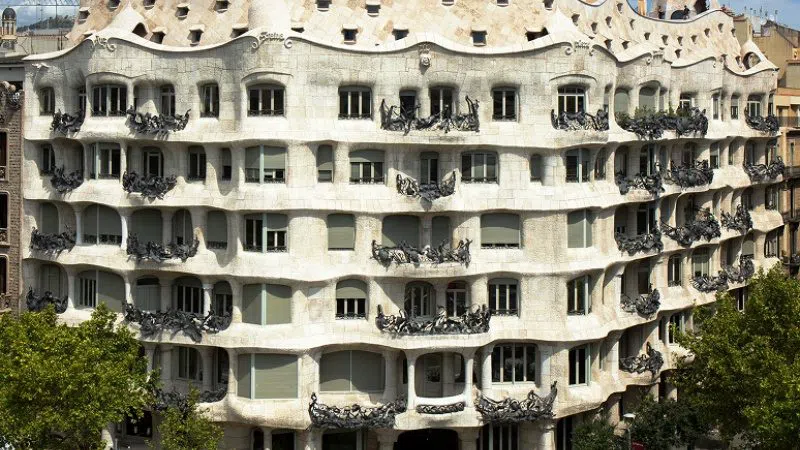
Take that combination. Casa Milà – La Pedrera (Passeig de Gràcia, one metro stop or a twenty-minute walk) is the obvious second Gaudí stop and the best place to see what he did with a roof when nobody was waiting a century for it to be finished. Day tickets with audioguide run from €25 to €29, the sunset ticket is €25, the Night Experience €39, under-11s free. Rooftop capacity is managed, so groups get split across slots.
Is it worth it
Yes, with one condition: go inside. The exterior is free from two sides and you can photograph it all day without paying, so if your plan is a thirty-minute pass around the hoardings, save the €26 and spend it at Sant Pau. The nave is what you are buying, and it is one of a handful of interiors anywhere that does something to people regardless of what they believe. It suits anyone with an eye for structure, families with young children who go free and who read it as a forest immediately, and photographers who can take the first or last slot. It suits you less if crowds ruin rooms for you, in which case the eastern glass at opening time is your only workable window.
Best time to go
First slot of the day for the eastern glass and the thinnest crowd; the last ninety minutes for western reds and a slower room. Any weekday beats a weekend, and the quietest months are the cold, wet ones from November to February, when the basilica is also warmer than the street. Spring and autumn are the fair compromise. July and August mean queueing in full sun for a timed entry, so pick an early slot and keep the afternoon for shade on Avinguda de Gaudí. Book the slot before anything else that day and build around it, because the slot does not move.
Before you go
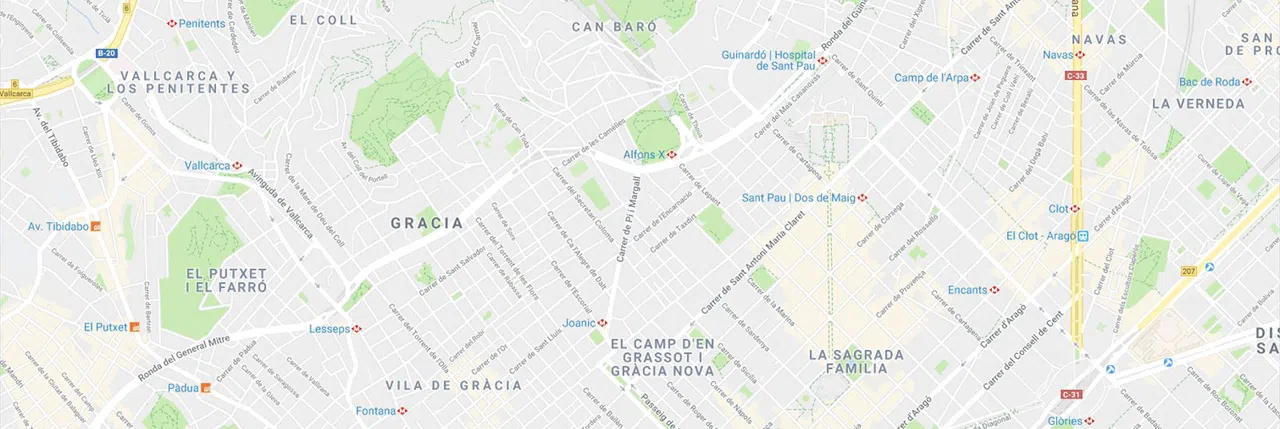
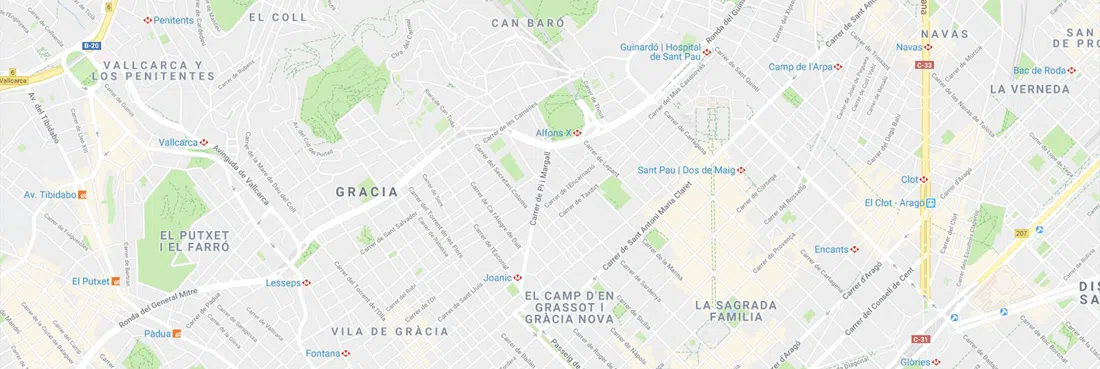
Metro lines L2 and L5 stop at Sagrada Família and put you out beside the Nativity façade; a multi-journey travel card is far cheaper than singles. Cards are taken everywhere, but carry €20 or so in coins and notes for the market, the promenade terraces and the small cafés. Budget roughly: nothing at all for both squares and the promenade; €26 to €30 for the basilica and its museum, which is the right spend; €40 if you add the towers; around €60 to €70 for a full day pairing the basilica with Sant Pau or La Pedrera and lunch. For where to sleep, the blocks immediately around the basilica are thick with apartment-style stays and boutique hotels, quiet after dark but short on good food, so compare them against the Eixample proper with a Barcelona hotel search before you commit. The rest of the city, and what to pair this with, sits in our Barcelona guide.