The Barcelona issue
Between Noon and Two: Barcelona's Vermouth Hour, Poured Straight from the Barrel
A calm, neighbourhood-by-neighbourhood walk through the city's most honest ritual — where to stand, where to sit, and which barrels are worth the detour.

By Robin MeijerNeighbourhoods, sights and the slow way round the city
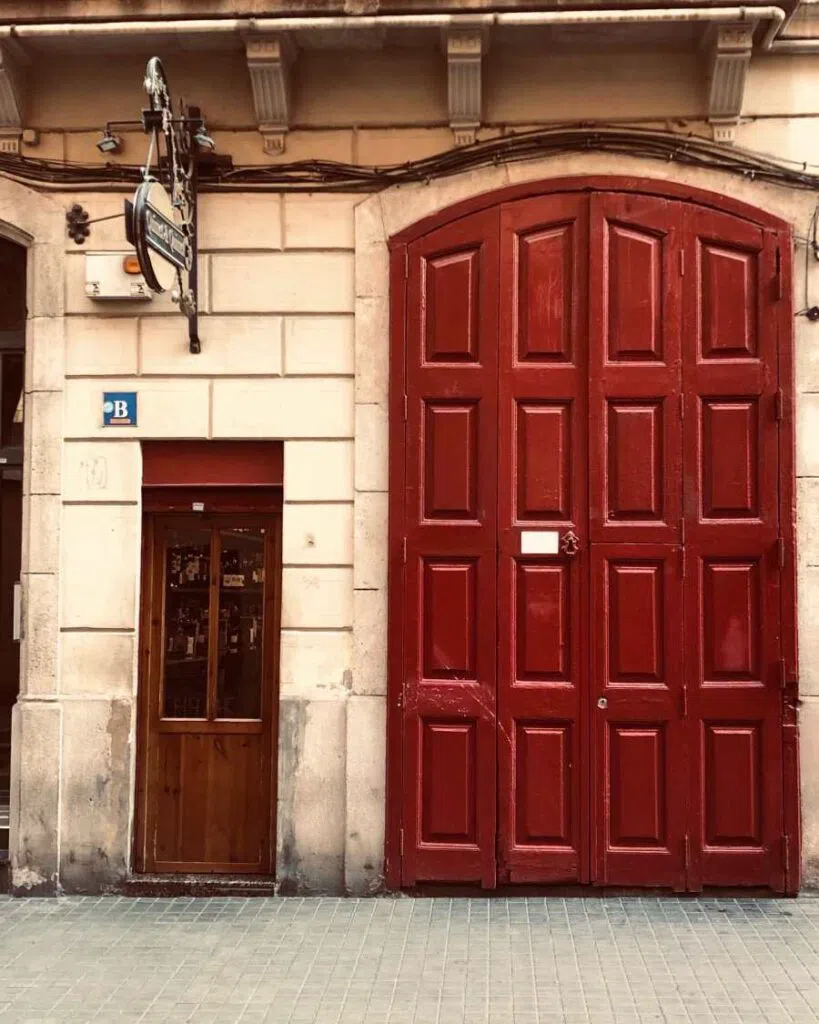
By half past noon the shutters roll up and the barrels begin to breathe. In Barcelona the stretch between twelve and two belongs to vermut — a bittersweet, herb-steeped fortified wine poured over ice with a fat green olive and a twist of orange, drunk standing at a marble counter beside a plate of anchovies. It is the city's most honest hour: no reservation, no dress code, no queue you have to book weeks ahead — just a glass, a stool if you are quick, and the slow unwinding that Catalans call fer el vermut, "doing the vermouth," before they even think about lunch.
The drink itself is old and local. Reus, an hour down the coast, was once one of Europe's great vermouth capitals, and the habit of sipping it at midday never left Catalonia. The best bars still draw it de l'aixeta — from the tap, straight off the barrel — cloudy, cold and faintly medicinal from the wormwood and gentian steeped inside. What follows is a walk through the neighbourhoods where the ritual survives intact, with an honest note on each door: which rooms swallow a group of eight happily, and which will only ever hold two of you propped at the zinc.
Bring cash, bring patience, and don't eat a big breakfast.
Poble Sec: the spiritual home
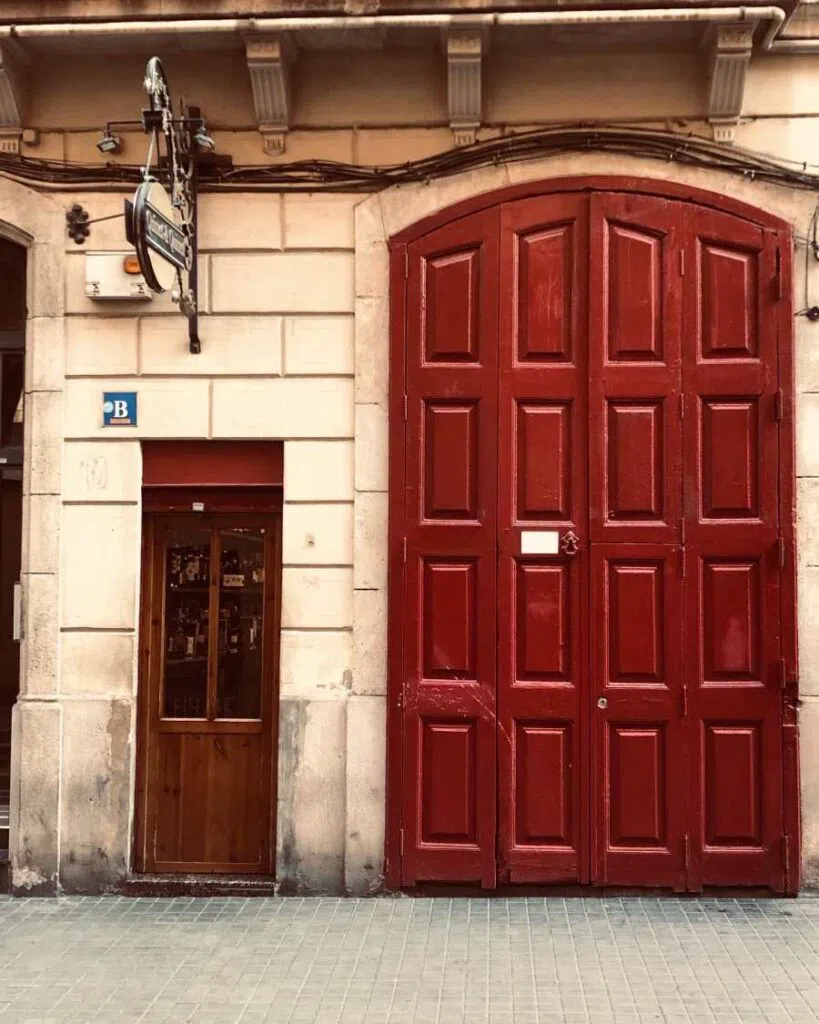
Start on the low slope beneath Montjuïc, in Poble Sec, because this is where the ritual feels least performed. Walk up Carrer del Poeta Cabanyes and you arrive at Quimet i Quimet (Poble Sec), a fourth-generation bodega barely wider than a corridor, its walls stacked floor to ceiling with bottles. There is no seating and no booking — you stand, you point, and a member of the family builds you a montadito, a little tower of preserved fish, cheese or roasted vegetable on a slice of bread, assembled in front of you (montaditos run about €3–5, a vermut around €3). It is a rite of passage rather than a meal, and it works for two to four people leaning at the counter; a real group will simply not fit. Come the moment it opens, because within twenty minutes the doorway is a wall of shoulders. Note that it closes for the weekend, so this is a weekday pleasure.
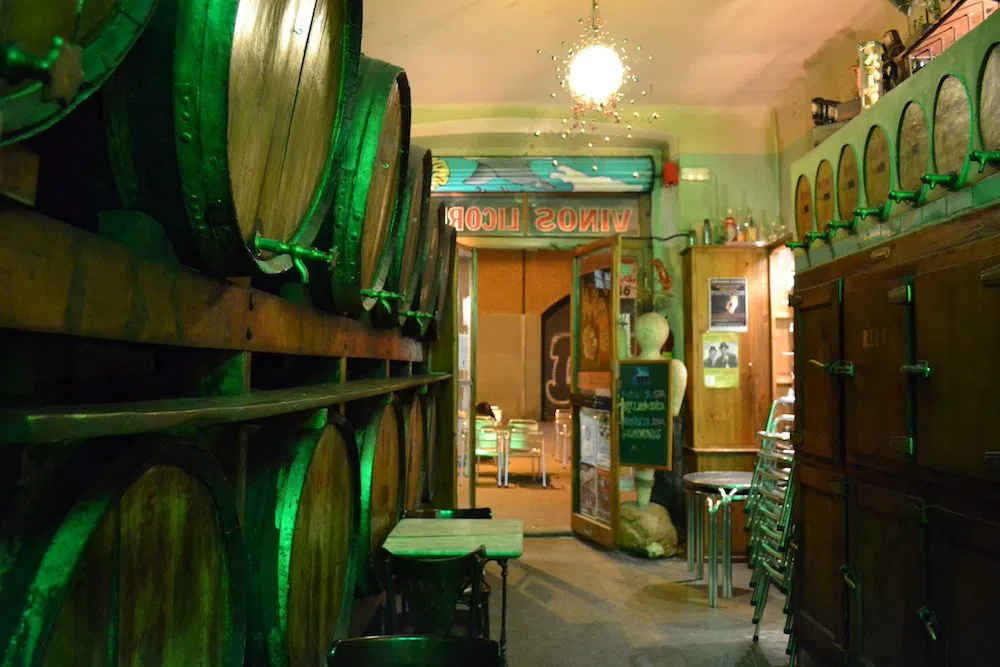
A few minutes' walk away, the mood loosens at Gran Bodega Saltó (Poble Sec), a gloriously bohemian room hung with salvaged carousel figures and mismatched lamps. The vermut here comes from the barrel and costs almost nothing — around €2.50–3 — and the place tolerates a group in a way Quimet i Quimet never could. The hour to aim for is Sunday at 13:30, the vermut musical, when a rumba or acoustic act sets up and the whole room tips gently into the afternoon (there are Thursday concerts too). It trades polish for atmosphere, which is exactly the point.
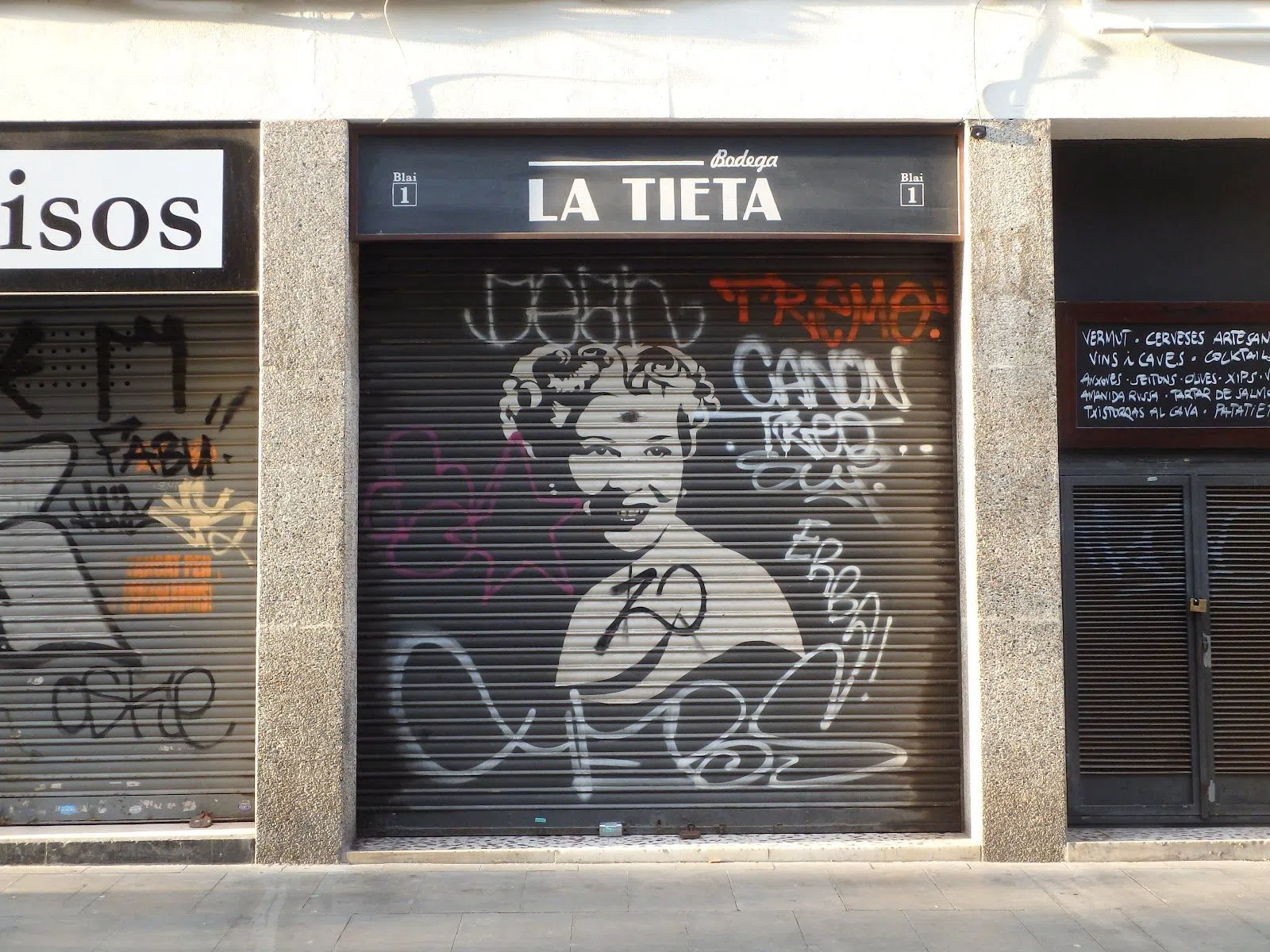
Round the corner onto Carrer de Blai — the pedestrian spine that everyone means when they say "the tapas street" — and find Bodega La Tieta (Poble Sec), a snug, owner-run vermuteria with a handful of terrace tables spilling onto the lane. The vermut is well chosen, the beers well poured, and the welcome warm; it suits a couple or a small group comfortably, though a large party will find the inside tight and should aim for the outside tables (vermut around €3). It is the kind of place where the person pouring remembers your order, which on Blai — a street that can feel like a conveyor belt at night — is worth a great deal at midday.
Plan your Barcelona trip
Live prices from our booking partners.
Free cancellation on many rooms. We may earn a commission when you book.
The old city: Gòtic, Born and Raval
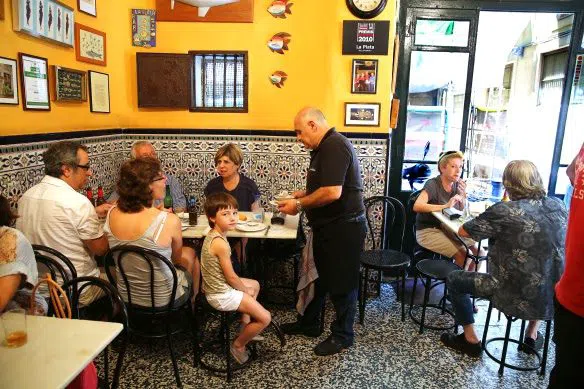
Drop down into the medieval grid and the vermouth hour hides in plain sight. In the Barri Gòtic, on a narrow lane off Carrer de la Mercè, Bar La Plata (Barri Gòtic) has been doing four things — and only four things — for the better part of a century. The star is a plate of whole fried anchovies, crisp and salty, eaten standing with a small glass of vermut or house wine (tapas around €3–4, drinks about €2.50). There are no reservations and barely any indoors; the crowd spills onto the cobbles. It is a time capsule and a genuine survivor, workable for a few friends but never a group — treat it as one stop on a longer crawl rather than a destination in itself.
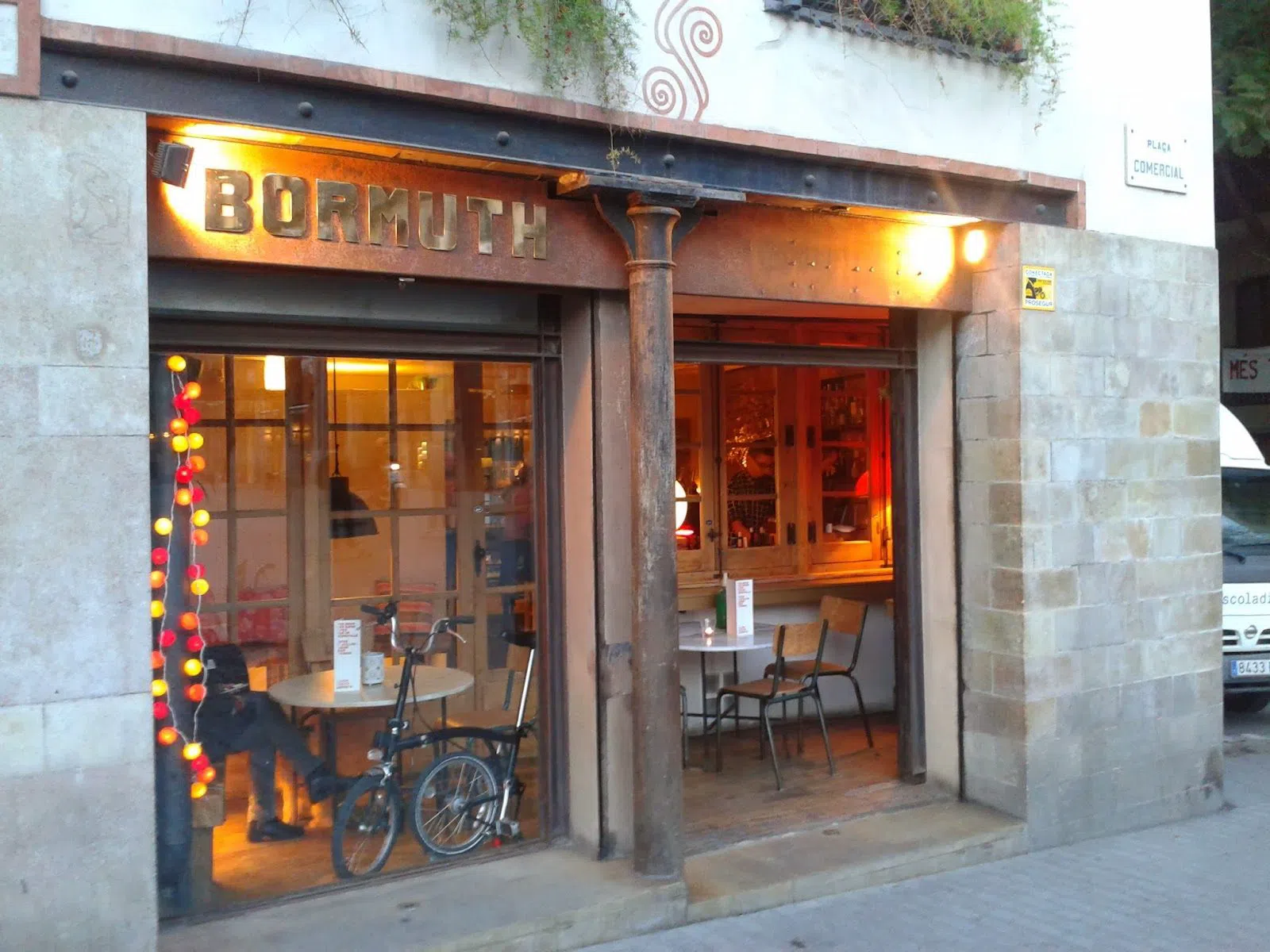
Cross into El Born and the format changes. Bormuth (El Born) is the pragmatist's choice, the bar you steer a larger party toward when standing-room romance has run its course. Its name splices Born and vermouth; the space is generous by old-city standards, it takes reservations, and it stays open till late every day of the week (vermut around €3–4, tapas €4–8). Book ahead if you are more than four. It is easygoing and used to an international crowd, which makes it the reliable anchor of any Born itinerary — the place where the numbers actually add up.
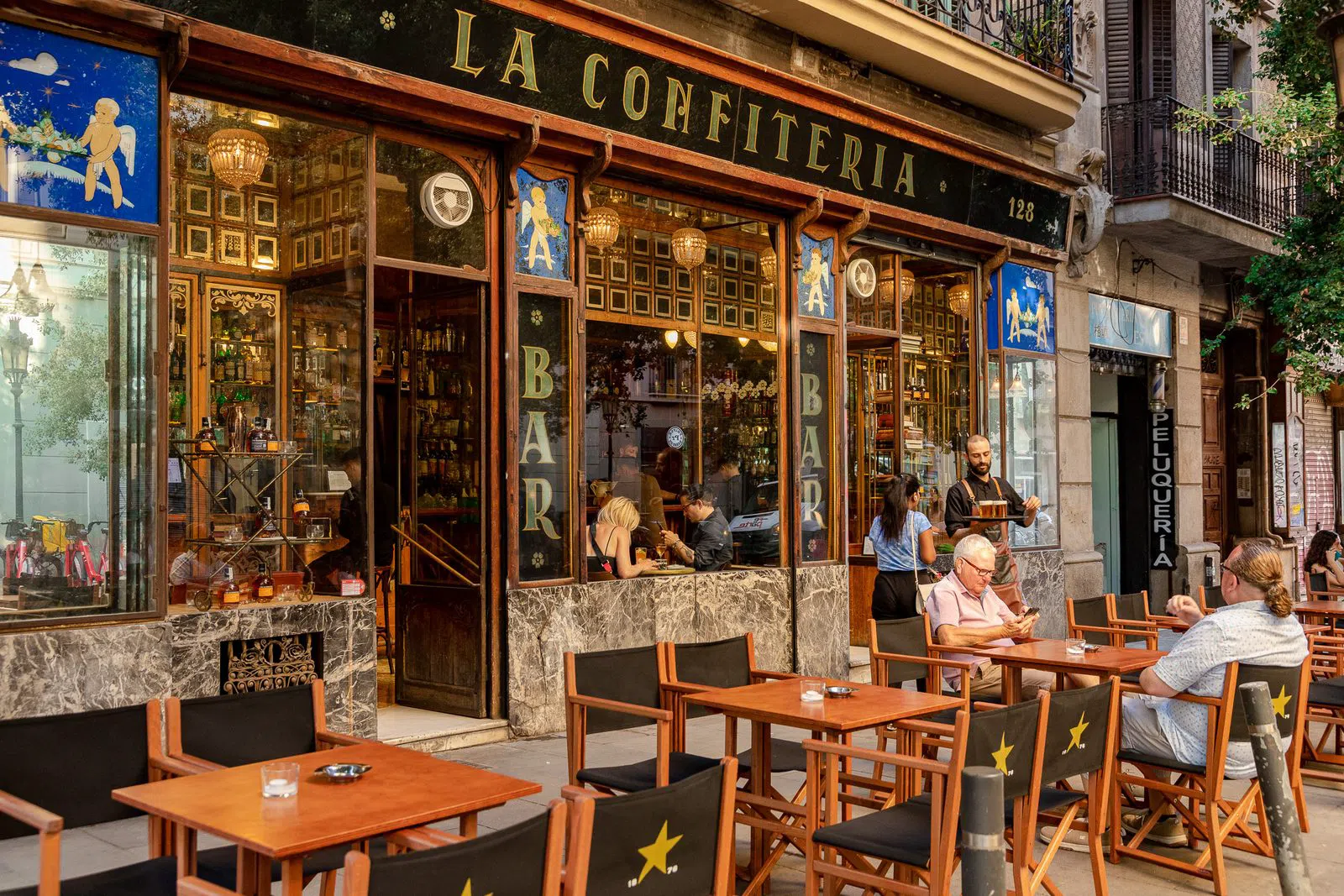
Walk west through the Raval to Carrer de Sant Pau and step into La Confitería (El Raval), a former sweet shop whose modernista interior — carved wood, etched glass, painted ceilings — is one of the most beautiful preserved rooms in the city. It is cocktail-led in the evenings now, but come early and it pours a proper aperitiu vermut, and you go as much for the room as for the glass (vermut and aperitiu around €4, cocktails higher). There is space front and back, so a group is comfortable here, and the earlier you arrive the more the light does its work on all that glass and gilt.
Eixample's new wave
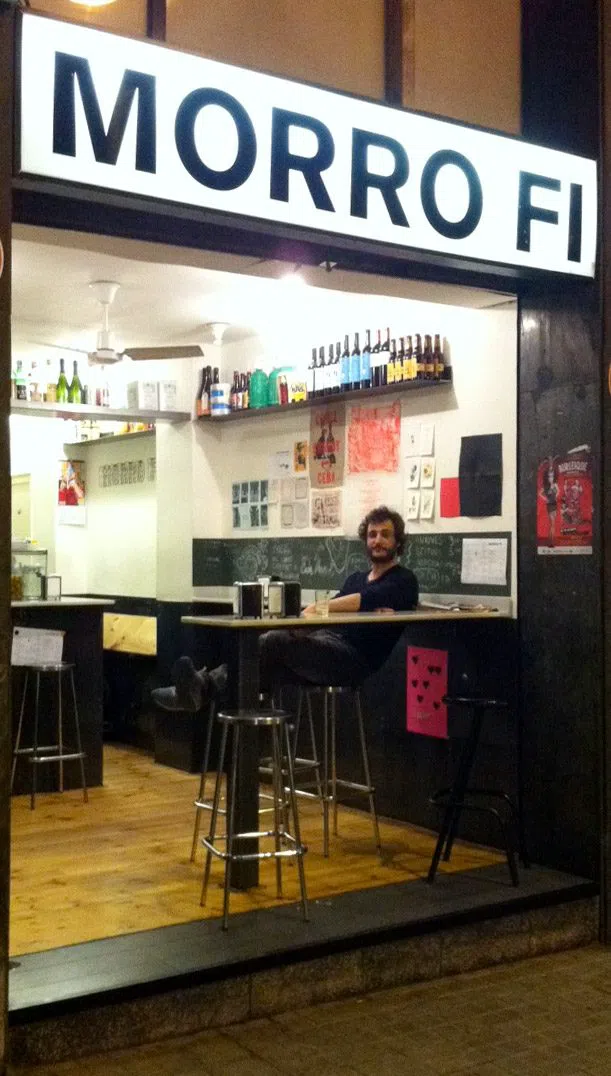
The vermouth revival — the reason a once-unfashionable grandparents' drink is now on every menu — was largely written in the Eixample, and two addresses tell the story. Morro Fi (Eixample) began as a trio of food bloggers documenting their bar-hopping; they now bottle their own vermut and conservas and run this tiny, tiled bar that is more or less the poster child of the whole movement (vermut around €3, plus tinned-seafood tapas). It is genuinely small — squeeze in for two or three, spill onto the pavement, and abandon any hope of seating a crowd. The vermut is excellent and the ethos is pure: good tinned fish, cold drinks, no ceremony.
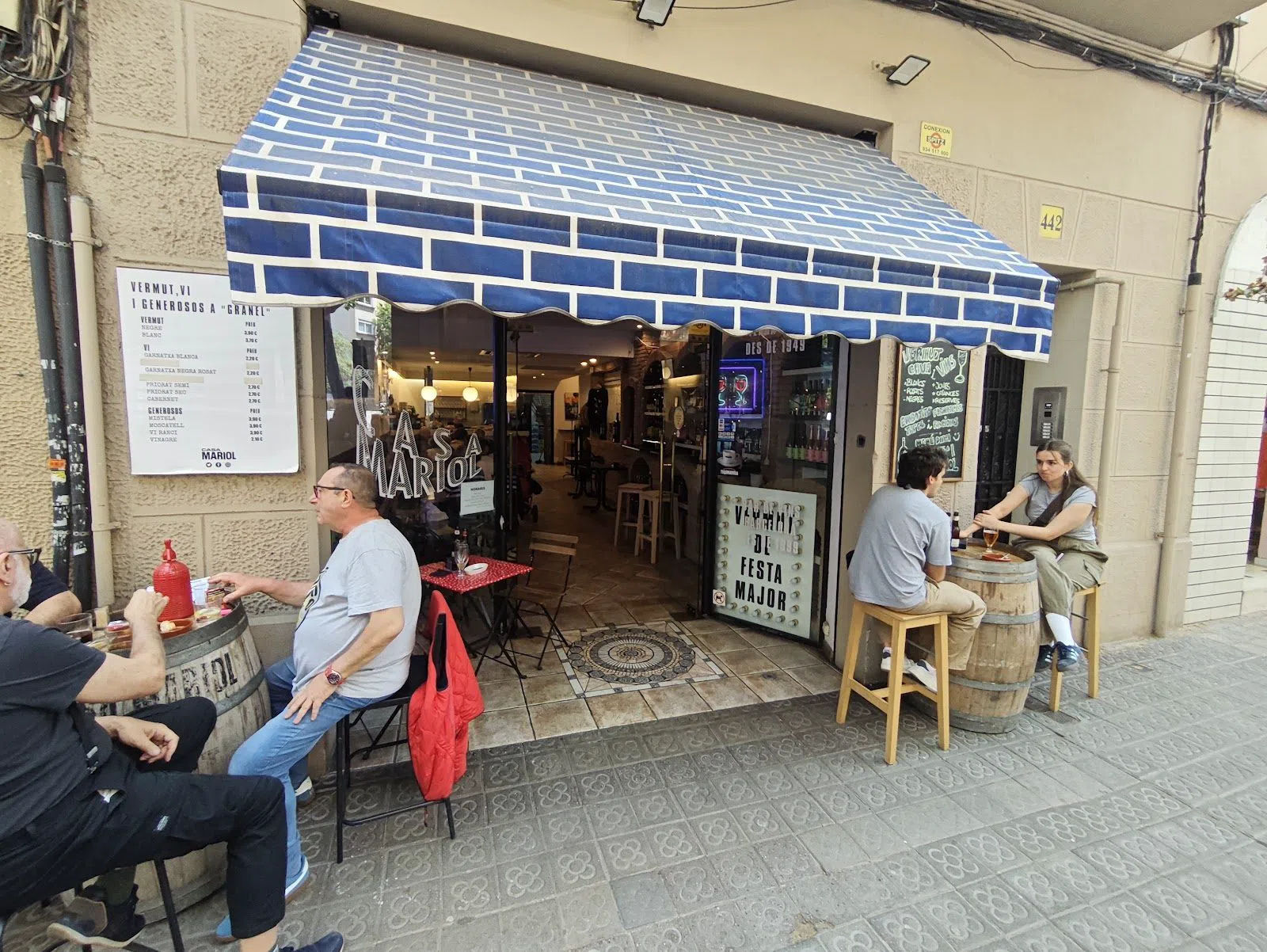
A short walk away, Casa Mariol Wine Bar (Eixample) offers the opposite proposition — room to breathe. It belongs to a Terra Alta winery, so the vermut and the wines are the estate's own, and the combo deal (three drinks plus three tapas for around €9.50) is some of the best value on this list for a table of friends. It runs tastings and live music, and it welcomes groups without fuss, which makes it a sensible landing spot when you have visitors in tow and want to sit down for once. Think of Morro Fi as the shrine and Casa Mariol as the clubhouse.
Gràcia's purists
Up in the low-rise streets of Gràcia, the vermouth hour is a neighbourhood affair rather than a tourist one. La Vermuteria del Tano (Gràcia) is frequently named the finest pure vermut in Barcelona — a small, tile-and-marble classic where regulars stand three-deep on a Saturday afternoon (vermut around €2.50–3, with tinned-fish tapas). It came under new management in 2026 but has kept the traditional format intact, which locals will tell you is no small mercy. It is best for a couple or a small group; arrive early on a Saturday or you will be drinking on the street, and note that it closes on Sundays.
For something quieter still, seek out Vermuteria Lou (a residential pocket away from the crowds), a small, friendly local vermuteria that — usefully — takes reservations, so a modest group can actually plan around it. Its kitchen punches well above the room: its huevos estrellados were named the best tapa in Barcelona, and the whole place runs on flavour rather than frills (vermut around €2.50–3, tapas at very fair prices). It is the sort of address you leave off the group chat and keep for yourself.
Barceloneta and Sant Antoni: sea air and terraces
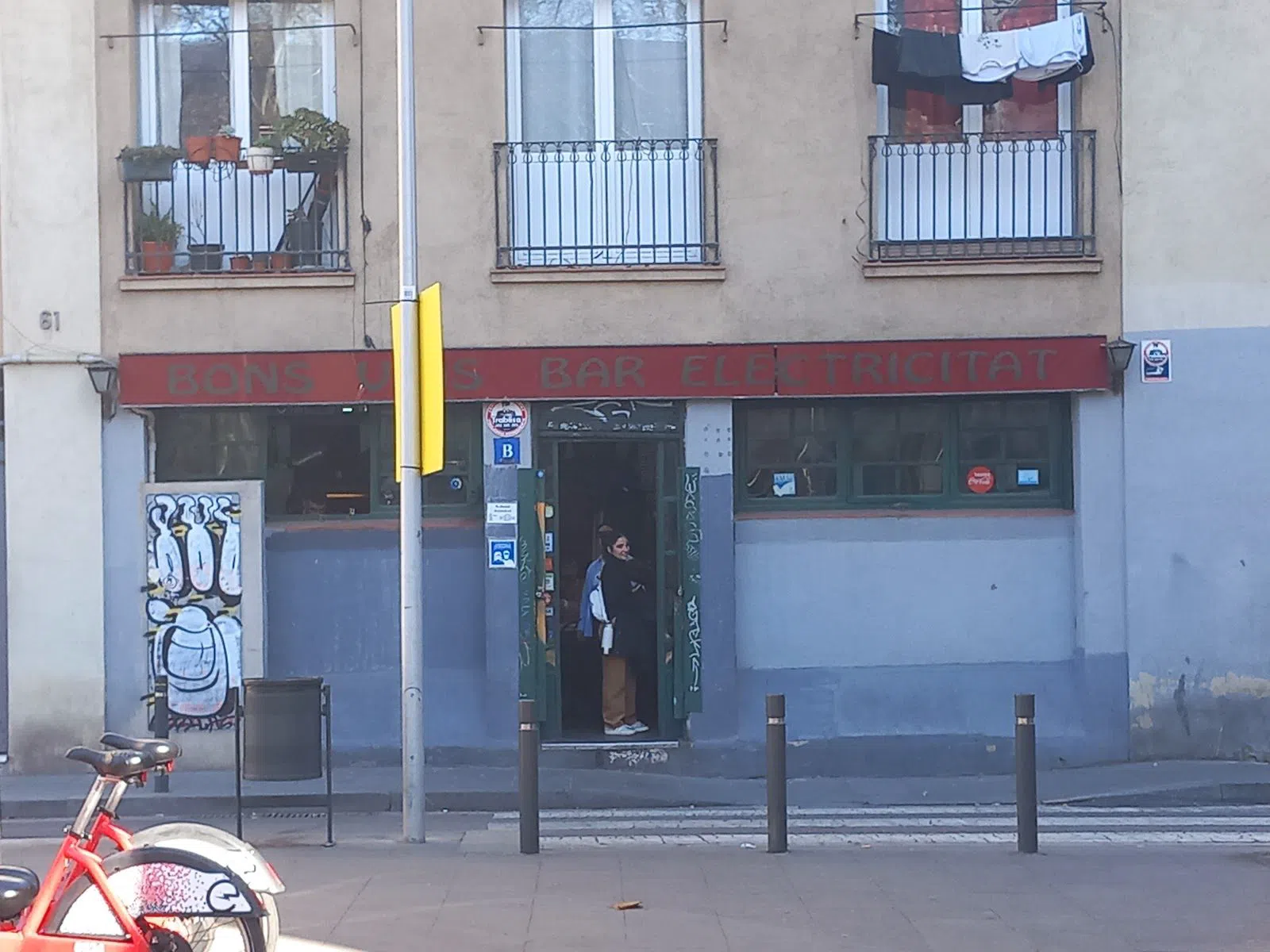
Two last stops sit at the edges of the map and reward the walk. In Barceloneta, a block back from the sand, Bar Electricitat (Barceloneta) keeps the oldest format of all: barrel and carafe, vermut ladled straight from the cask for around €2 a glass, or roughly €15 for a bottle to carry home. It is cramped, local and mostly Catalan- and Spanish-speaking, with no bookings and no concessions to visitors — which is precisely its charm. A handful of friends can squeeze in; a large group cannot. Go for the barrio Barceloneta of before the beach boom, still stubbornly itself.
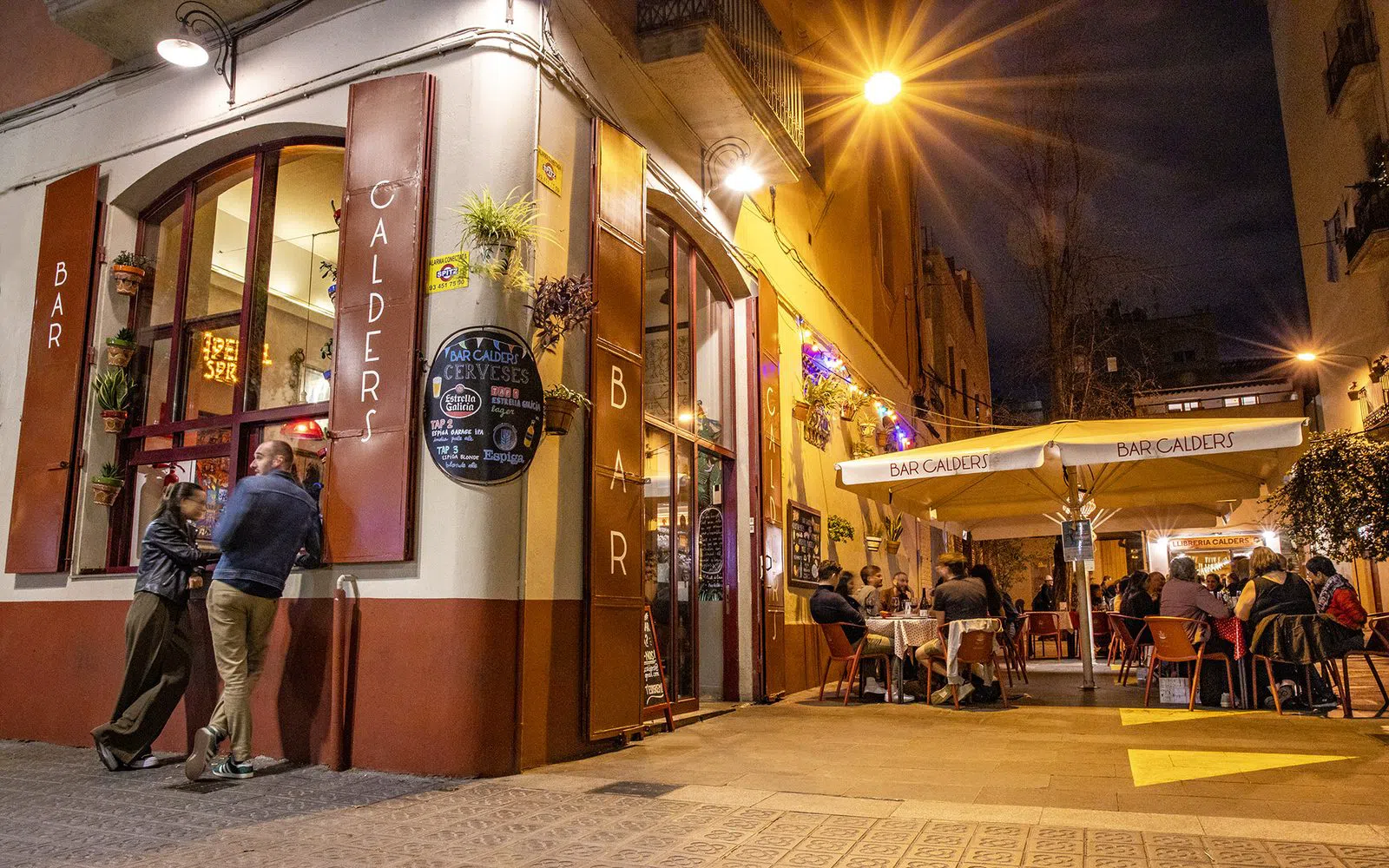
And in Sant Antoni, Bar Calders (Sant Antoni) offers the one thing almost nothing else on this list can — a proper terrace. On a pedestrianised corner it functions as the neighbourhood's living room, pairing vermut with Spanish and Mexican small plates for a long, sunny sit (vermut around €3–4, tapas €4–9). It takes no reservations and it is deservedly popular, so the move is simple: arrive as the tables open, claim one, and hold it. For a group that wants to spread out under the sun rather than jostle at a counter, this is the best hangout of the lot.
Groups, couples and the honest door
A quick reckoning, because these bars are not interchangeable. If you are two, the standing shrines are yours: Quimet i Quimet, Bar La Plata, Morro Fi and Bar Electricitat reward the intimate approach and punish the crowd. If you are a genuine group of six or more, steer toward the rooms built for it — Bormuth and Vermuteria Lou take bookings; Casa Mariol and La Confitería have the floor space; Bar Calders has the terrace if you get there early. Gran Bodega Saltó and Bodega La Tieta sit comfortably in the middle for a relaxed handful of friends. Almost none of these places take walk-in reservations for the standing bars, and that is the whole ethos: the vermouth hour is first-come, unhurried, and refreshingly free of the pre-booked queue. Turn up, look for the barrel, and let the room decide the pace.
For more on eating, sleeping and moving around the city, the wider Barcelona guide covers the neighbourhoods these bars sit in.
Practical notes
Timing. The vermouth hour is real and narrow: aim to be at your first stop by 12:30–13:00, and treat 14:00 as the moment the crowd — and the good tapas — thin out. Sunday lunchtime is the classic slot (and the day Gran Bodega Saltó turns musical), but check closures: Quimet i Quimet shuts at weekends, La Vermuteria del Tano closes Sundays, and several close in the afternoon before reopening for the evening.
Cash. Carry it. The oldest bodegas — Bar La Plata, Bar Electricitat and the smaller counters — are cash-first or cash-only, and a barrel bar is no place to fumble with a card.
Budget. This is an affordable ritual by design. A vermut runs roughly €2–4 almost everywhere, tapas and montaditos €3–8, and a full crawl of three or four stops need not cost more than €25–35 a head. Casa Mariol's three-and-three combo (around €9.50) is the standout value if you want to sit and settle in.
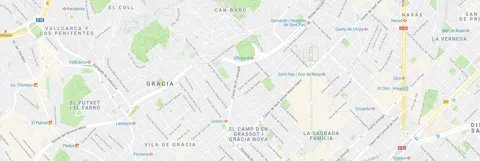
Getting around. The clusters here are walkable in their own right — Poble Sec and Sant Antoni almost merge, and the Gòtic, Born and Raval are a single medieval knot. Between neighbourhoods the metro is quick: Poble Sec and Sant Antoni sit on the green and blue lines, Barceloneta on the yellow, Gràcia at the top of the grid. To base yourself within walking distance of the barrels, start a Barcelona hotel search around Sant Antoni, Poble Sec or the old city.
One rule. Order the vermut de casa — the house pour, ideally from the barrel — before you reach for anything bottled. It is cheaper, colder, and the truest version of what this hour is for.
Before you go
What time is the vermouth hour in Barcelona?
It runs roughly from noon to 2pm — the pre-lunch stretch Catalans call fer el vermut. Aim to arrive by 12:30–13:00; by 14:00 the crowds and the best tapas thin out. Sunday lunchtime is the classic slot, but check closures, as several bars shut at weekends or in the afternoon.
Do I need to book a table for vermut in Barcelona?
Mostly no — the standing bodegas like Quimet i Quimet, Bar La Plata, Morro Fi and Bar Electricitat are first-come and don't take reservations. If you have a group of six or more, book ahead at Bormuth or Vermuteria Lou, which do take reservations, or arrive early to claim a terrace table at Bar Calders.
What is vermut and how is it served?
Vermut is a bittersweet, herb-and-wormwood-infused fortified wine. In Barcelona's best bars it's poured de l'aixeta — from the tap, straight off the barrel — over ice with a green olive and a twist of orange. Order the vermut de casa, the house pour, before anything bottled.
Which vermut bars are best for a group?
For six or more, choose the roomier spots: Bormuth and Vermuteria Lou take reservations, Casa Mariol and La Confitería have space, and Bar Calders has a terrace if you arrive early. Standing bars like Quimet i Quimet and Bar La Plata only really work for two to four people.
How much does a vermut cost in Barcelona, and do bars take cards?
A vermut runs about €2–4 almost everywhere, with tapas and montaditos €3–8. A crawl of three or four stops need not exceed €25–35 a head. Carry cash: the oldest bodegas, including Bar La Plata and Bar Electricitat, are often cash-first or cash-only.