Barcelona neighbourhood guide
Poblenou, Barcelona: the beachside quarter where factories became the city’s cool back room
Barcelona’s old factory district has turned itself into a calmer, beach-adjacent neighbourhood of horchata, sourdough, design studios and late dinners — with the sand at the end of the street.

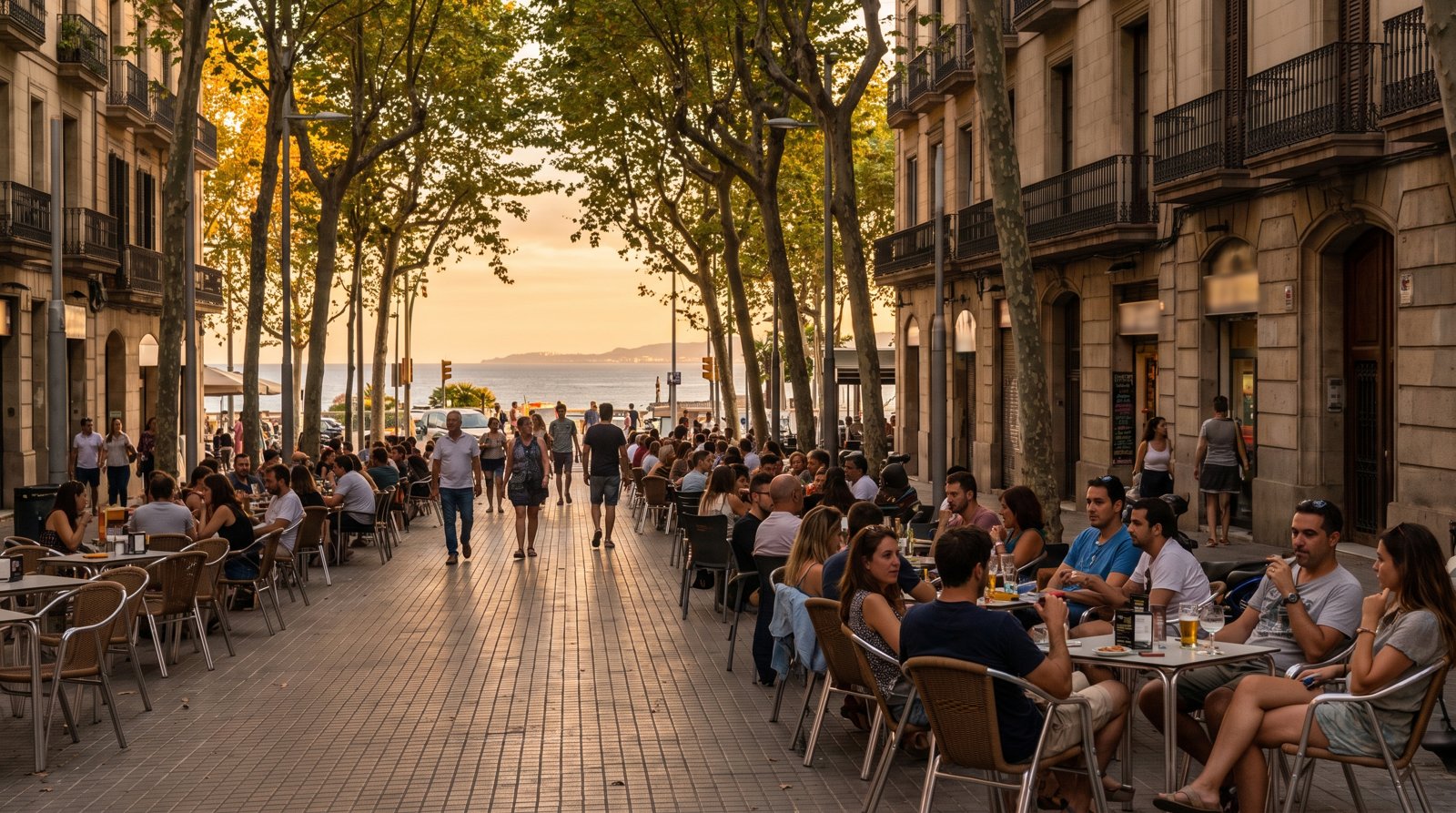
Walk the length of the Rambla del Poblenou and the neighbourhood gives itself away in fragments: a queue for horchata outside El Tío Che, the smell of slow-fermented sourdough drifting out of Cruixent, and, three blocks on, the flat blue line of Bogatell beach. That’s Poblenou in miniature — old factory quarter, new creative back room, and a place where the day can end with salt on your skin instead of a taxi queue.
What Poblenou is known for
Poblenou still carries the bones of the city that built things. This was Barcelona’s manufacturing engine, the “Catalan Manchester,” all chimneys, textile sheds and hard work; then the mills emptied out and the neighbourhood did something much more interesting than collapse. It kept the brick shells, filled them with artists, co-working start-ups and design studios, and let the past and present share the same walls. That’s the appeal: not a polished theme of industrial chic, but a lived-in district where the old horchateria survives a few doors from a glossy co-working loft, and where the sea is close enough to salt the air.
The Rambla del Poblenou is the spine you feel first: tree-lined, social, leafier than you expect, with terraces that seem to hold the day open a little longer. Then there’s Carrer de Marià Aguiló, which behaves more like a village than a city street. People cross to say hello. Kids cut through the superblock streets that Barcelona handed back to pedestrians in 2016, and the benches and ping-pong tables give the place a kind of public living room energy. Poblenou is unpolished, low-rise and stubbornly local. Even the beach feels woven into the street plan rather than bolted on.
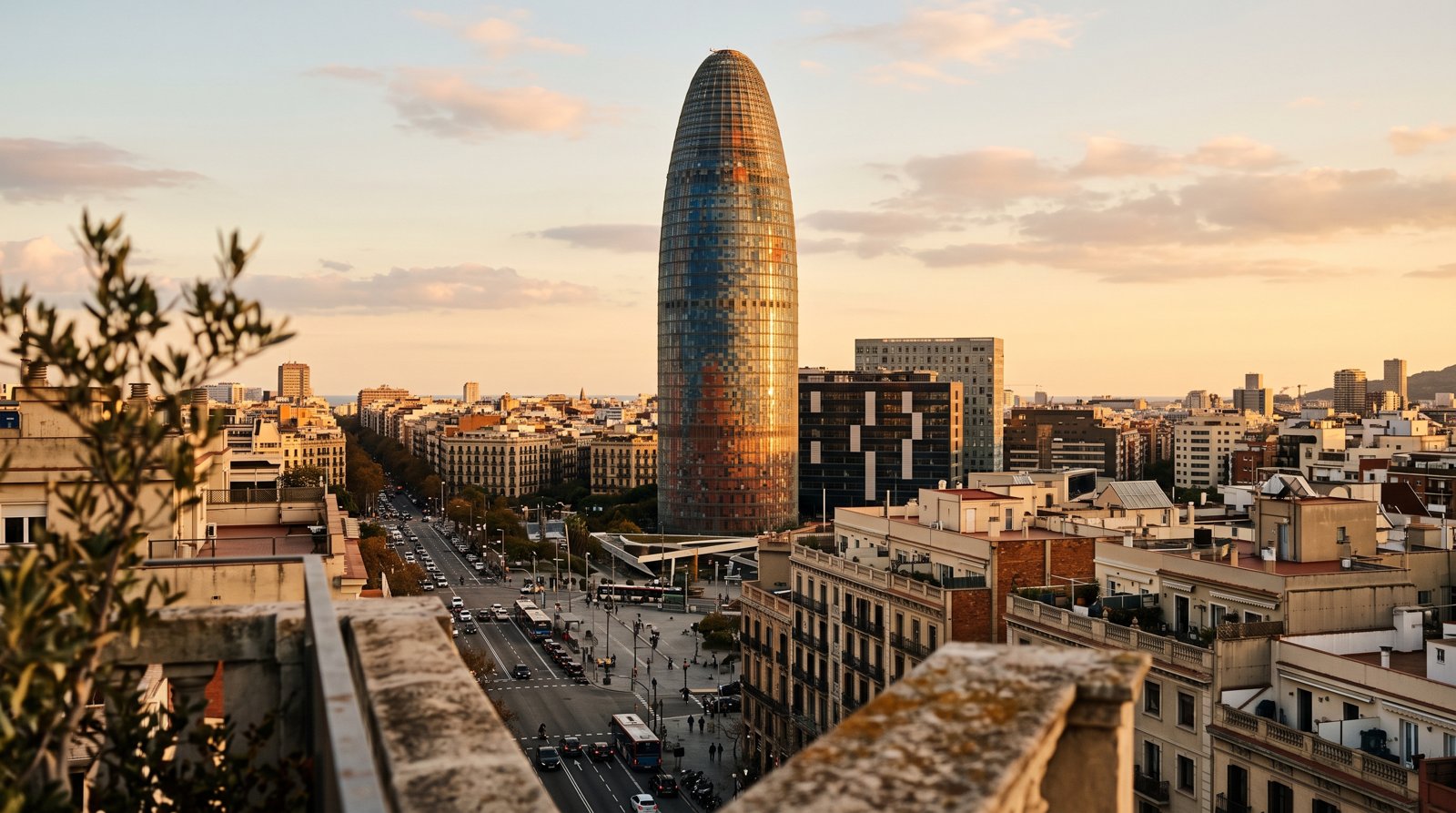
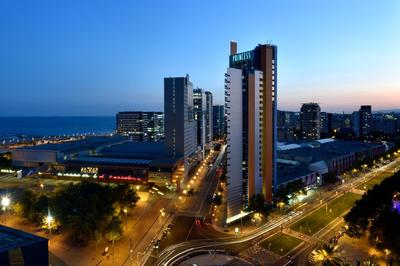
The neighbourhood’s modern identity is all collision: 22@ tech offices in one direction, converted textile mills in the other, and above it all Jean Nouvel’s Torre Glòries glowing at night like it has somewhere better to be. That contrast is why Poblenou keeps getting called Barcelona’s cool district, usually by people who would be very upset if it got too cool.
Where to eat & drink
Poblenou eats with its sleeves rolled up. The grand old name is Els Pescadors on Plaça de Prim, a seafood house that grew out of an 1848 fishermen’s tavern and still feels like the sort of place where the neighbourhood remembers itself. Fish arrives daily from Arenys de Mar, the rice dishes are what you order, and a full meal runs around €50–60 a head. It’s the kind of restaurant that doesn’t need to raise its voice; the room, shaded by ombú trees, does the work for it.
A few streets away, Can Recasens is all candlelight and mosaic tile, a warren of rooms built around Catalan and French cheese, charcuterie and warm melted-cheese plates. Book ahead. Locals do, which is always a useful clue. This is not the sort of place you drift into on a whim and expect to be the only person who thought of it.
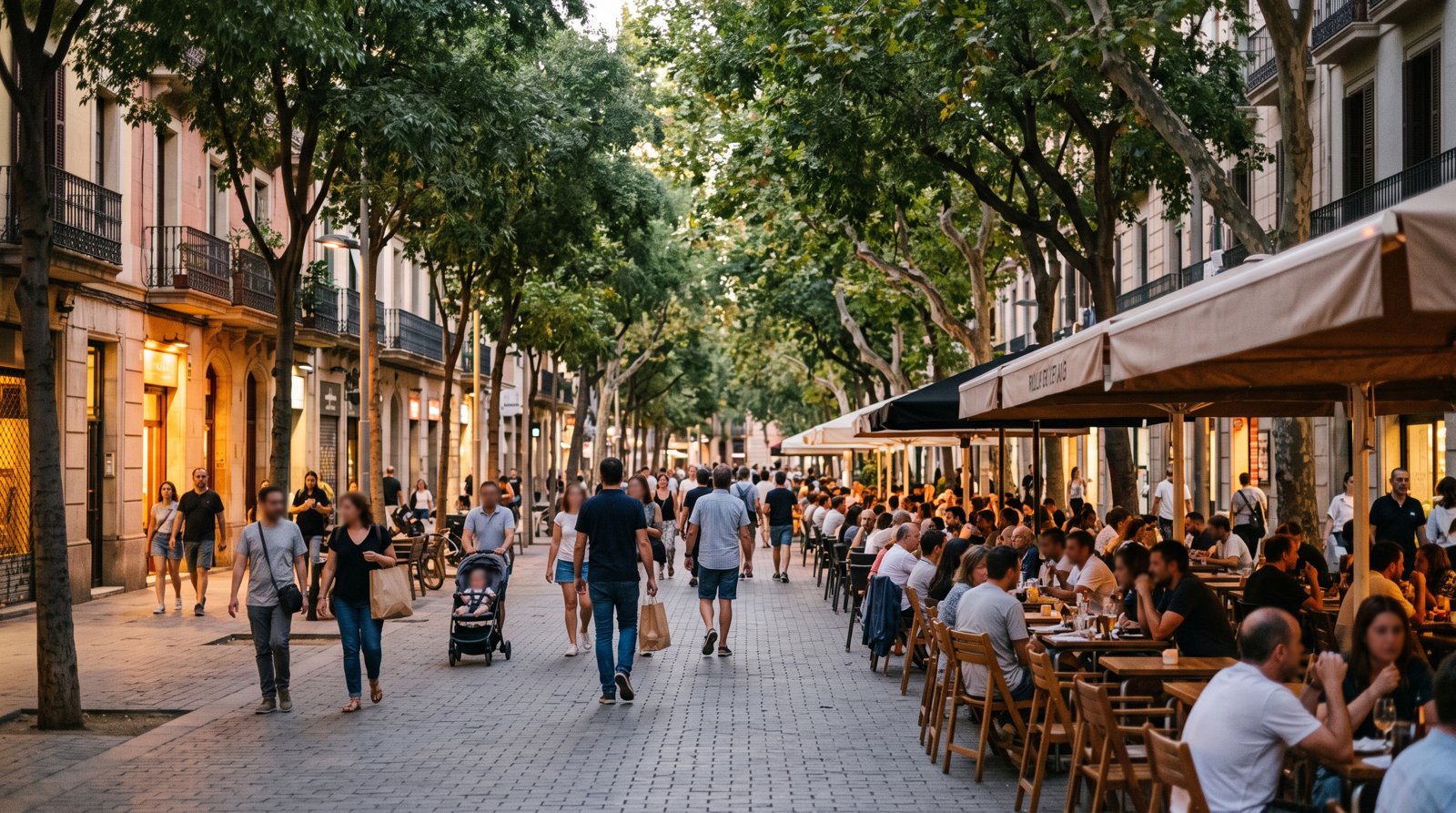
On the Rambla itself, Els Tres Porquets at No. 165 does confident market tapas and small plates, while El 58 at No. 58 is where blackboard specials and proper bravas draw a crowd without any fuss. Both feel like they belong to the street rather than to a branding exercise, which in Barcelona is still a point in their favour.
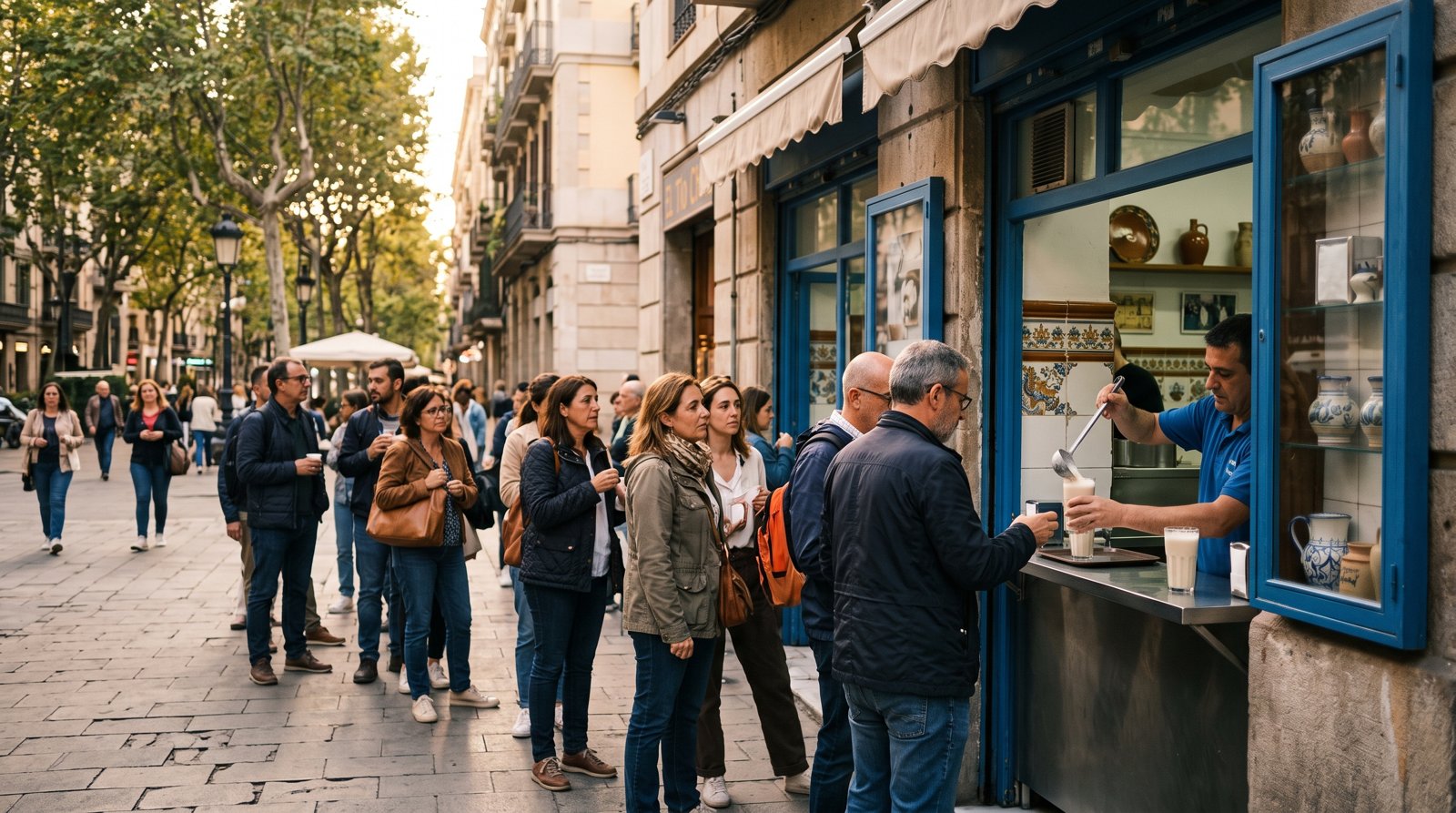
For breakfast or a mid-afternoon rescue, Cruixent on Carrer de Pujades turns out 60-odd sourdoughs behind a street-facing workshop window, the sort of bakery that makes you slow down whether you planned to or not. Little Fern on Carrer de Pere IV is the speciality-coffee and veggie-brunch stop for the factory-street crowd, all good beans and a lighter, more contemporary kind of lunch. And then there’s El Tío Che, family-run since 1912, on the corner of Rambla del Poblenou and Carrer del Joncar — the place that gives the neighbourhood its sweet tooth. Horchata, ice cream, and a queue that tells you more about local loyalty than any guidebook ever could.
When the day tilts toward the beach, Xiringuito Escribà on the seafront is where Barcelonins actually queue for paella and seafood rice. It’s the right kind of seaside institution: busy, practical, and entirely aware that the sand is doing half the marketing.
Going out
Poblenou’s night begins like a long dinner and ends like a choice, which is kinder than the city’s more frantic districts. The big exception is Razzmatazz on Carrer dels Almogàvers, the former factory that became the neighbourhood’s most famous club and, arguably, Barcelona’s most famous too. Five rooms under one roof, each with its own sound — indie and new wave in the main Razz Club, techno and house in the Loft — and in 2025 it marked twenty-five years of doing exactly what it does. It is still the place people mention with the same tone they use for old myths: half reverence, half warning.
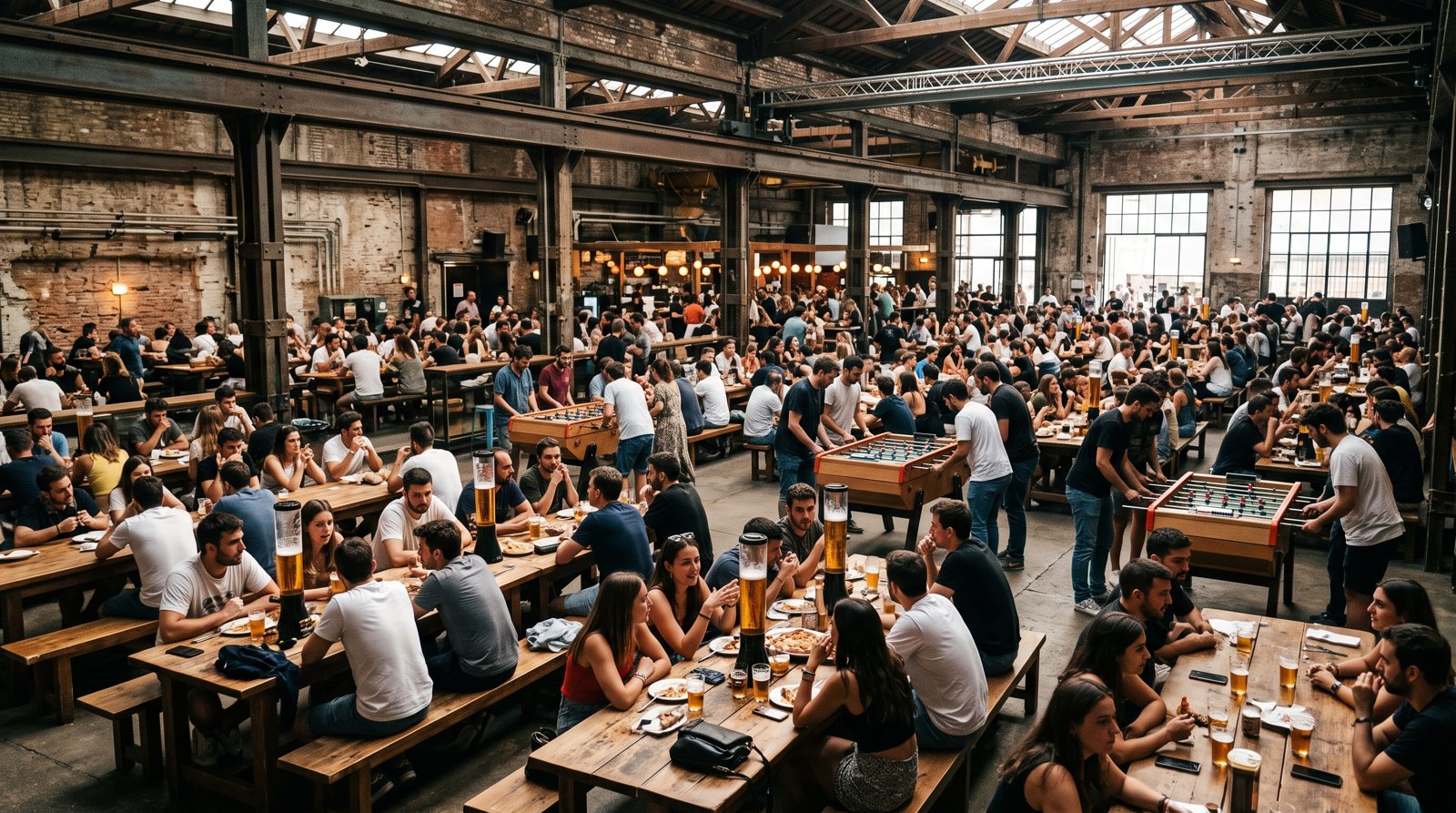
For something more local and less likely to require earplugs, L’Ovella Negra del Poblenou on Carrer de Zamora is a cavernous 1908 warehouse turned megataverna, all cheap beer, litre-towers and table football early in the evening. It’s where the pre-club crowd gathers, but it’s also where the district’s youth energy shows up without apology. No velvet rope, no mystery, just volume.
Balius on Carrer de Pujades is the bar for people who like their vermouth with a bit of theatre and their cocktails in a former pharmacy. It does Aragonese small plates and hosts a much-loved live-jazz session on Sunday evenings, which is exactly the sort of detail that makes a neighbourhood feel like it has a pulse rather than a pitch deck. La Cervecita Nuestra de Cada Día is the craft-beer den where the staff know the breweries by heart, and Madame George brings a glam-rock, queer edge to the cocktail hour without turning it into a costume party.
In summer, though, the smartest move may be the least decorated one: a beachfront chiringuito, a beer, and the sun going down over Bogatell. Poblenou doesn’t need to shout after dark. It just changes register.
Things to do
Start at the top of the district with Torre Glòries, Jean Nouvel’s shimmering 2005 tower, because in Poblenou the skyline is part of the story. The Mirador Torre Glòries gives you a 360° view from around 125 metres up, and Tomás Saraceno’s Cloud Cities sculpture hangs inside the dome like a science-fiction dare. General admission is about €18, and in summer it opens daily. Up there, the city reads differently: the grid, the sea, the factory quarter, the old and new Barcelona all in one glance.
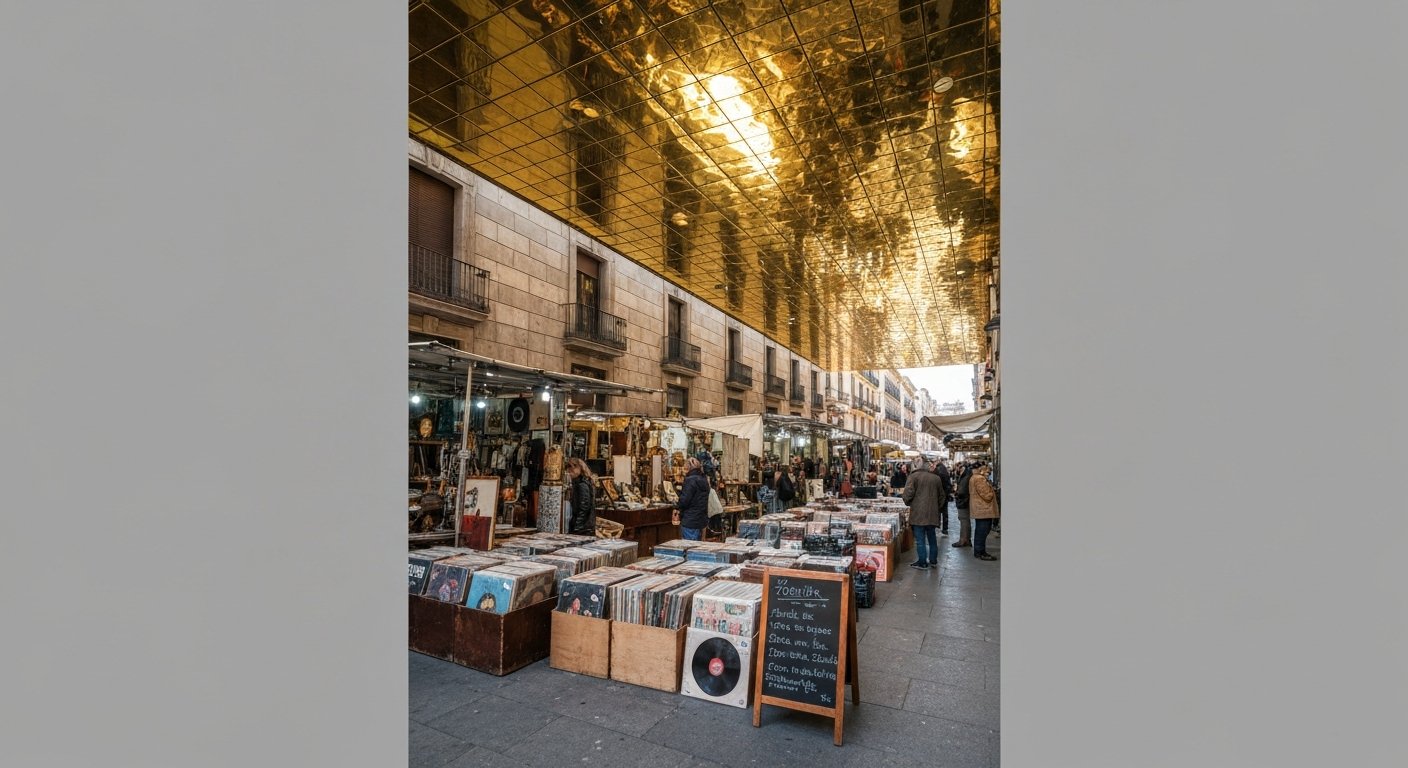
At street level opposite sits Els Encants, Barcelona’s centuries-old flea market under a mirrored gold canopy. Go on a Monday, Wednesday, Friday or Saturday morning if you want the proper rummage — antiques, vinyl, tools, furniture, the occasional object you did not know you needed until it was in your hand. It is one of those markets that rewards patience and a slightly feral eye.
Can Framis Museum, in a restored 18th-century factory on Carrer de Roc Boronat, is free to enter and holds 250-plus contemporary Catalan paintings across three floors. It is exactly the sort of place that makes sense in Poblenou: industrial shell, contemporary use, and no need to perform grandeur. Then there’s Palo Alto, the 1875 Gal i Puigsech textile factory now run as a creative complex by Javier Mariscal’s foundation. It hosts Palo Alto Market on the first weekend of most months, which turns the old factory and its gardens into a curated sprawl of independent design, vintage clothes, jewellery, records, artisan food trucks and pop-up bars. La Escocesa, meanwhile, keeps the arts-factory spirit rougher around the edges: part-squat, part-studio, and happily so.
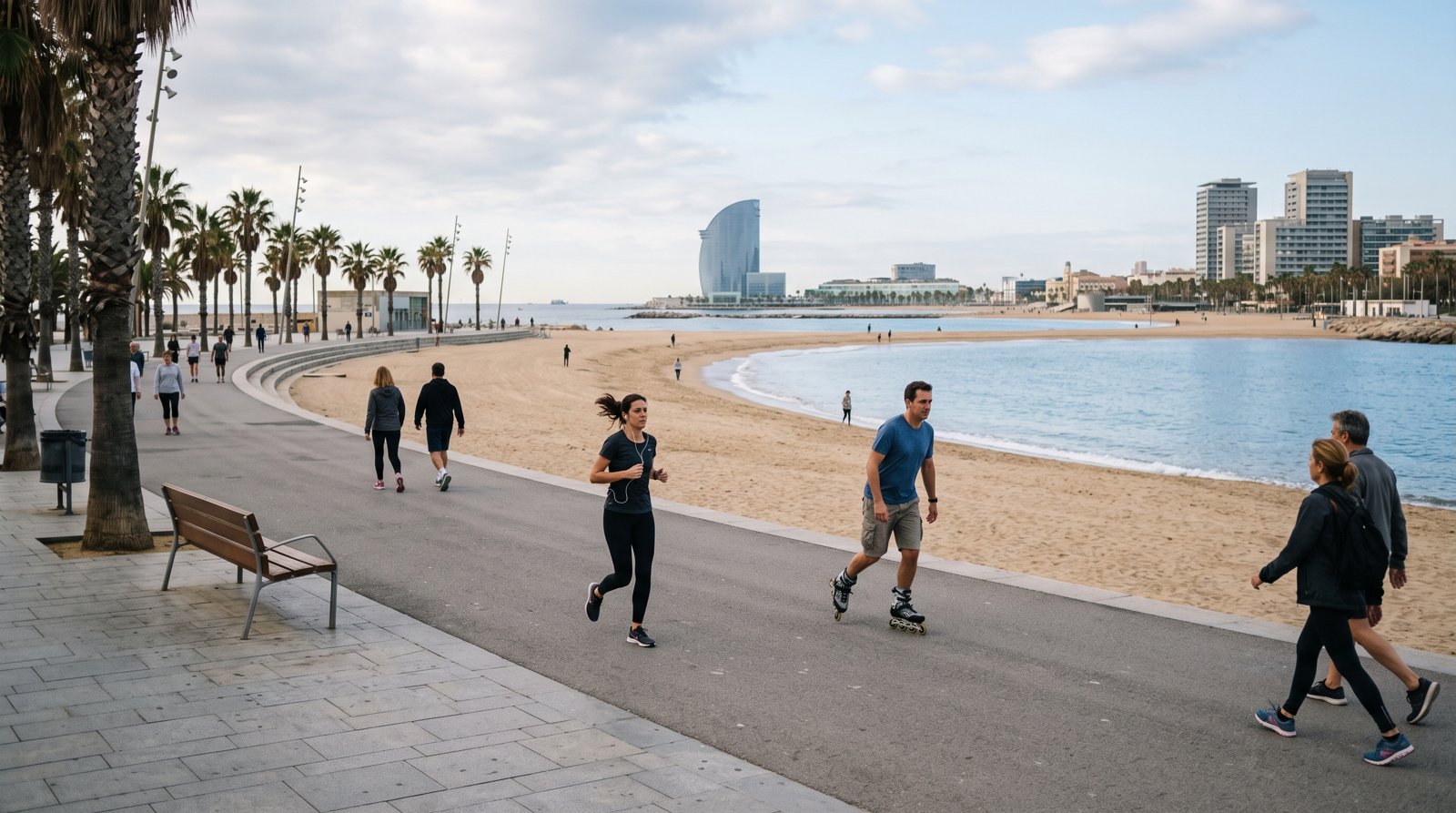
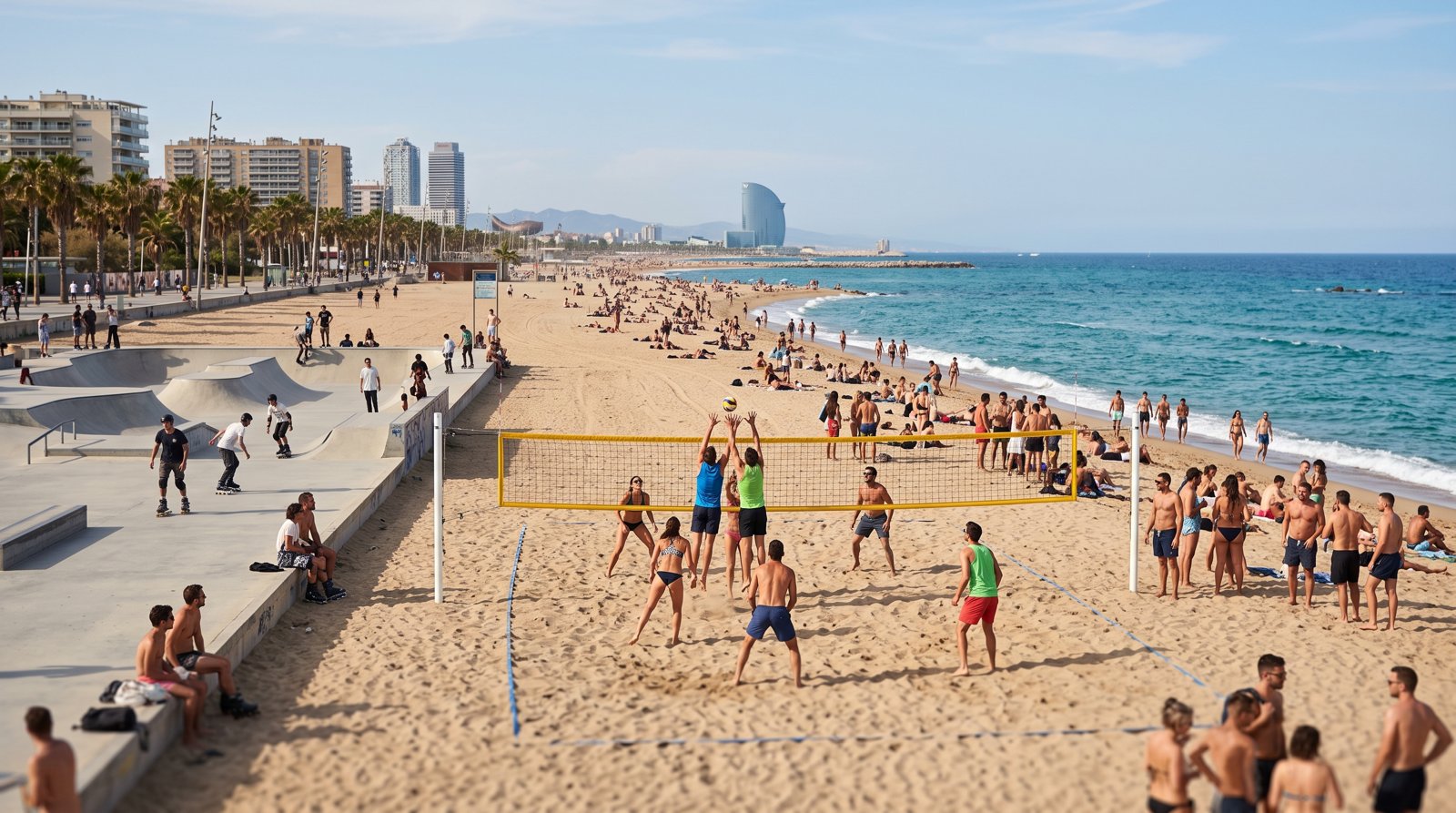
And then there’s the sea, which in Poblenou is not an afterthought but the district’s soft landing. Bogatell is the wide, calm, family-friendly beach with a rollerblade-and-jogging promenade, while Mar Bella has a skate park, beach volleyball and a lively naturist-and-LGBTQ+ stretch around the Chiringuito BeGay bar. If you want to do very little and feel you’ve done the right thing, the pedestrianised superblock streets are waiting for you with a bench.
Don’t miss in Poblenou
Torre Glòries / Mirador Torre Glòries
Jean Nouvel tower with a 360° observation deck (~€18) and Saraceno's 'Cloud Cities' sculpture
Els Encants (Fira de Bellcaire)
Historic open-air flea market under a gold canopy; best Mon/Wed/Fri/Sat mornings
Can Framis Museum (Fundació Vila Casas)
Free contemporary Catalan painting in a restored 18th-century factory on Roc Boronat
Palo Alto
1875 factory turned creative complex; Palo Alto Market on the first weekend of most months
La Escocesa
Part-squat, part-studio creative arts factory
Bogatell Beach
Wide, calm, local beach with a jogging-and-skating promenade
Mar Bella Beach
Skate park, beach volleyball and a naturist/LGBTQ+ stretch; tram to Selva de Mar
Shopping & markets
Shopping in Poblenou is not about grand statements; it’s about the pleasure of finding useful, beautiful things in former industrial units and market halls. Els Encants is the essential browse, one of Europe’s oldest flea markets, where the mirrored golden roof throws strange light over antiques, vinyl, tools, furniture and pure junk. It is a proper dig, and the best digging happens on Monday, Wednesday, Friday and Saturday mornings, when the market is awake enough to reward the patient.
Once a month, Palo Alto Market turns the old Gal i Puigsech factory into a curated fair that feels part shopping, part neighbourhood outing. Independent designers, vintage clothing, jewellery, records, artisan food trucks and pop-up bars fill the gardens and halls, and the whole thing has the energy of a district showing off without quite admitting it.
For everyday browsing, the design and homeware studios around Carrer de Pujades and Carrer de Pere IV are where Poblenou’s maker instinct shows up in practical form: plant shops, ceramics workshops, poster-and-frame stores, natural-cosmetics boutiques, all tucked into former industrial units that have been given a second life without too much fuss. And then there’s Carrer de Marià Aguiló, where the independent shops — bakeries, delis, small boutiques — remind you the neighbourhood is still a neighbourhood, not a concept.
Where to stay in Poblenou
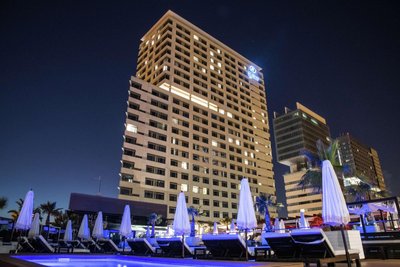
Poblenou suits travellers who want a calmer, more local base and don’t mind a short metro or tram ride to the big sights. The safest all-round choice is the stretch around the Rambla del Poblenou and Marià Aguiló: leafy, walkable, full of cafés and restaurants, and close enough to the beach that you can decide on sand before breakfast. Near Glòries and Llacuna, the redeveloped 22@ tech quarter brings a more modern apartment-style and business-hotel feel, handy for the tram, metro and Torre Glòries. Down by the seafront around Diagonal Mar and Poblenou beach, larger design and chain hotels put you right on the sand with sea views.
The price feel is mid-range and generally better value than the Old Town or the Eixample, with the trade-off that you’re 15–20 minutes on the metro from the Gothic Quarter and Sagrada Família rather than walking distance. Which, frankly, is often the point. Poblenou is for people who want Barcelona at a lower volume.
Where to stay here
Hotels in Poblenou
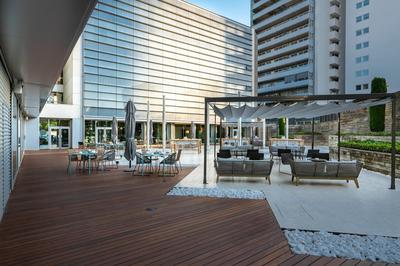
Our best-rated stays in this neighbourhood. Prices are approximate “from” rates — confirmed at the provider when you continue. We may earn a commission if you book through our partners — at no extra cost to you.
 In this area
 In this area
 In this area
 In this area
 In this area
 In this area
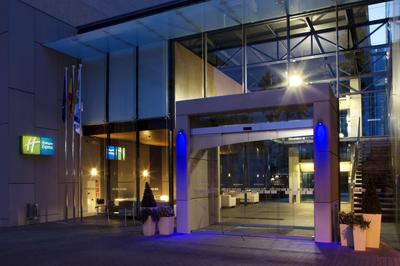
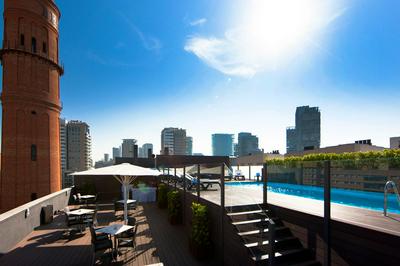
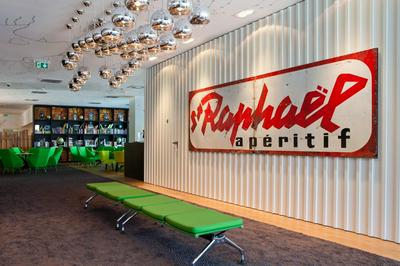
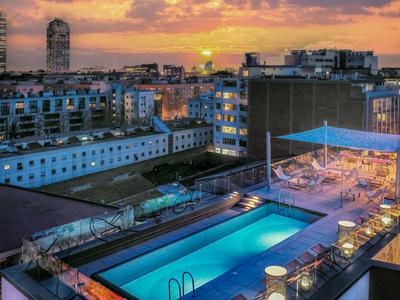
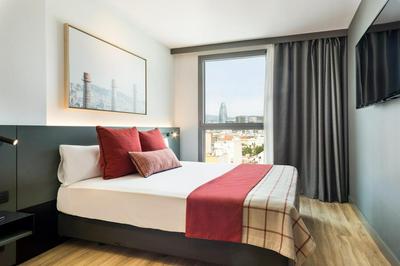
Holiday Inn Express Barcelona City 22@ by IHG
 In this area
 In this area
 In this area
 In this area
 In this area
 In this area
Getting around
Poblenou is flat, gridded and very walkable, which is half the reason it works so well as a base. The L4 metro threads through the district with stops at Bogatell, Llacuna, Poblenou and Selva de Mar, putting the city centre roughly 15 minutes away. Glòries and Marina on the L1 cover the western edge near Torre Glòries and Els Encants. The tram T4 runs along the seafront side toward Diagonal Mar and is the easiest way to reach Mar Bella beach at Selva de Mar.
Bikes make sense here, as does Bicing, because the terrain is flat and the beachfront cycle paths are exactly the kind of amenity that makes locals smug in the best possible way. For the airport, the simplest route is the metro or tram into the centre and a change onto the L9 Sud line to Terminals T1/T2, or the R2 Nord Rodalies train via Passeig de Gràcia. Either way, allow around 45–55 minutes door to door. That’s Poblenou in a sentence, really: close enough to be practical, far enough to feel like you’ve left the script behind.
Good to know
Poblenou — your questions
Is Poblenou a good area to stay in Barcelona?
Yes — especially if you’ve already been to Barcelona, or you want a calmer, more local base near the beach. It’s well connected by metro and tram, usually better value than the Old Town, and full of good cafés, restaurants and creative spaces. The catch is simple: you’re about 15–20 minutes from the Gothic Quarter and Sagrada Família by metro, not walking distance.
Is Poblenou safe?
Broadly, yes. It’s a residential, low-key district that feels relaxed by day and evening, and serious crime against visitors is rare. Use normal city sense: watch your belongings at Els Encants and on busy beaches, and don’t wander the quieter industrial-edge streets alone very late at night.
How far is Poblenou from the beach and the city centre?
The beach is the neighbourhood’s biggest perk — most of Poblenou is about a 5–10 minute walk from Bogatell or Mar Bella. The centre is farther but still easy: the L4 metro gets you to the Gothic Quarter or Sagrada Família in roughly 15–20 minutes.
What is Poblenou best for?
Beach days, speciality coffee, relaxed dining, design and creative culture, and a local base away from the crowds. It’s more terraces than clubbing, more neighbourhood life than headline sightseeing.
Gallery