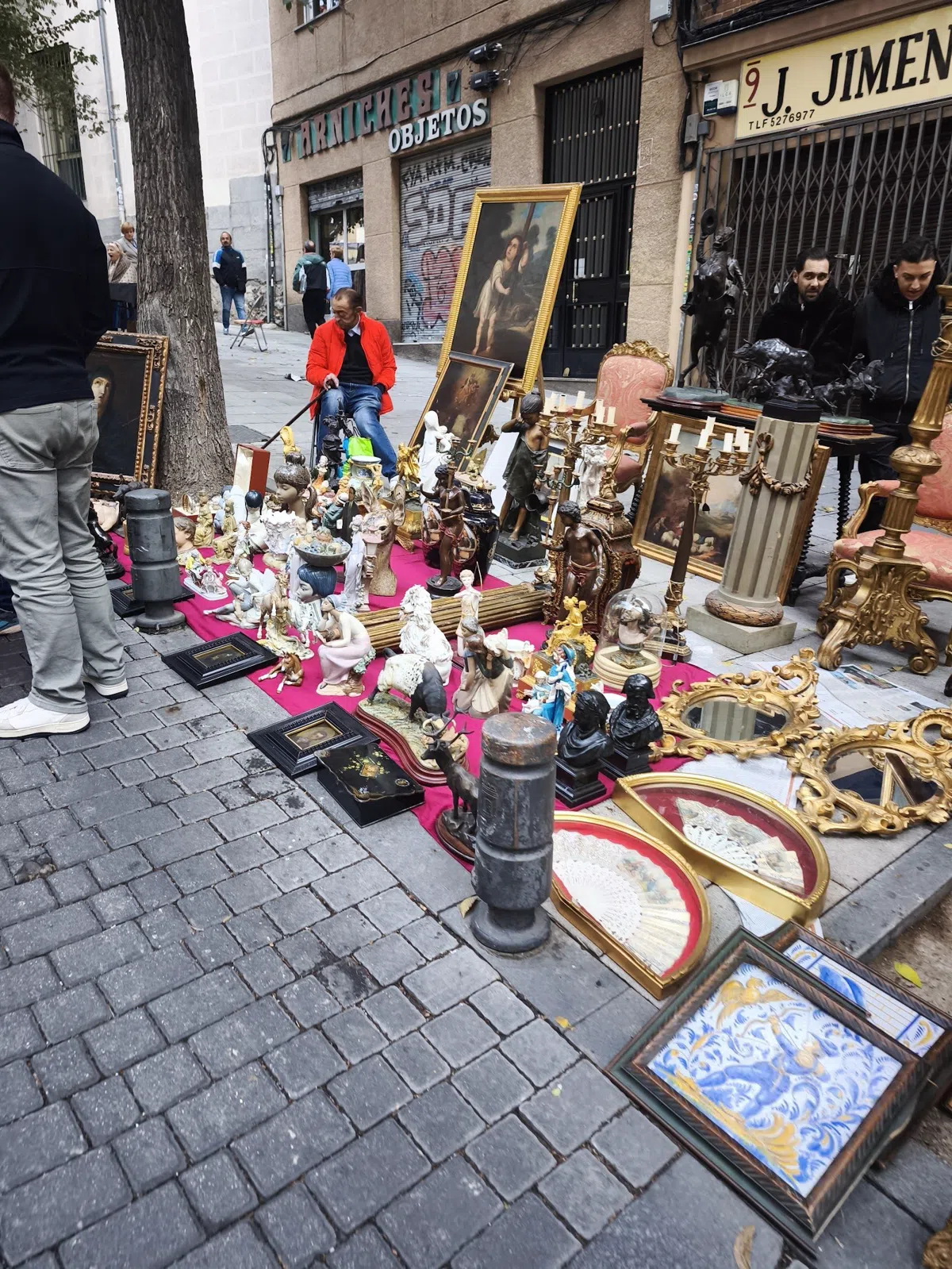

Under the mirrored steel canopy of Els Encants, a market so old it predates the printing press, dealers are already bartering over espresso before the first tourists find the escalators. This is not a single event but a citywide rhythm: every Sunday, and on several other days besides, Barcelona sends its collectors, its junk-hunters and its bargain-hunting families out to a scattered set of squares, markets and one dedicated street, each with its own rules, hours and specialities. None of it is staged for visitors — it is priced in euros from one to several thousand, and it is how a large slice of this city still buys its coins, its coats and its coffee tables.
Els Encants: Europe's Oldest Flea Market, Any Day You Can Get There
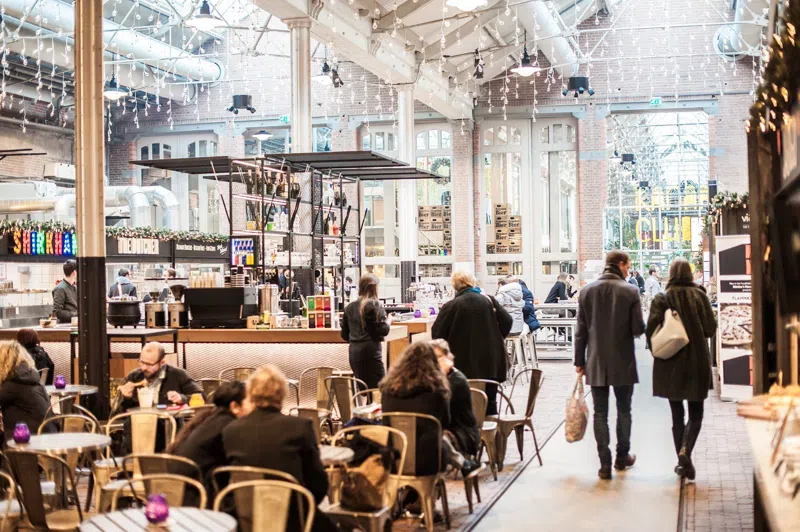
Everything else in this piece orbits Els Encants Barcelona (Fira de Bellcaire), in Poblenou at Plaça de les Glòries. It is Europe's oldest documented flea market, traceable in municipal records back to the 14th century, and it still runs on the principle it always has: dealers buy from the public and from each other, then resell under a canopy of mirrored steel panels that architects meant to make the market feel bigger than it is — and that, as a side effect, makes the whole place one of the best photo subjects in the city, provided you get there before 11am, when the crowds thicken and the reflections lose their clarity.
Entry is free. What you pay is set stall by stall and runs from a few euros for a chipped plate to several thousand for a genuine antique, so a first visit is best treated as a browse rather than a hunting trip with a fixed budget. The market's own theatre happens early: trader-to-trader auctions run from 8 to 9am on Monday, Wednesday and Friday, when professional dealers bid against each other for the morning's incoming stock before the public floor properly opens. You don't need to buy anything to watch this — it's one of the few places in Barcelona where you can see the wholesale side of the secondhand trade happen in the open.
The building itself is designed for groups: wide aisles and lift access mean neither a family with a pushchair nor a coach party of a dozen will struggle here, which is not something you can say for every market on this list.
Building a Sunday Rastro: Sant Antoni, Plaça Reial and Port Vell
Encants is the anchor, but "Sunday rastro" in Barcelona properly refers to a loop of three markets that exist, in this form, only on a Sunday morning — and this loop is what gives the city's secondhand culture its shape.
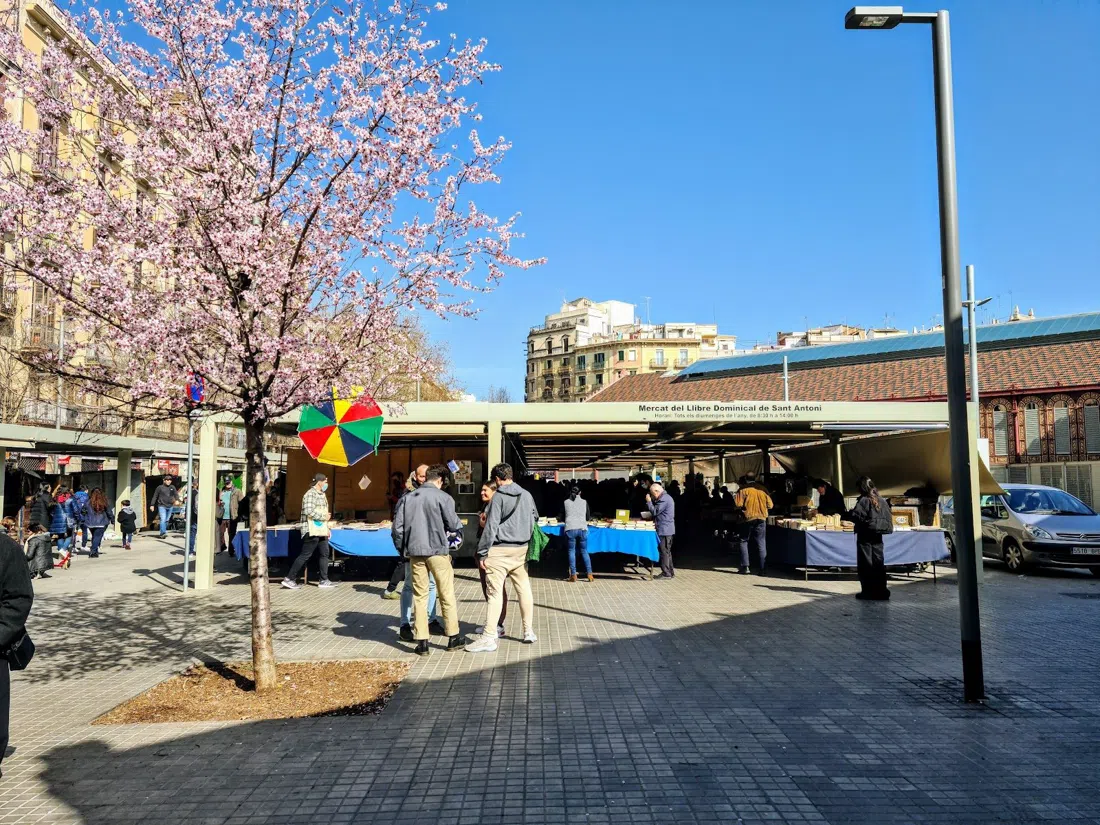
Start at Mercat Dominical de Sant Antoni, in the Sant Antoni district beside the restored Cerdà-grid iron market hall. It has run every Sunday, including through August, since 1938, laid out at street level with no entry control and no ticket queue — you simply walk the stalls. It's the book-and-coin counterpart to Encants' furniture chaos: paperbacks, first editions, coins, stamps, postcards and comics from €1, sold by traders who know their stock and expect you to know roughly what you're looking at. Cash only, at every stall, with no exceptions — leave the card at the hotel for this one.
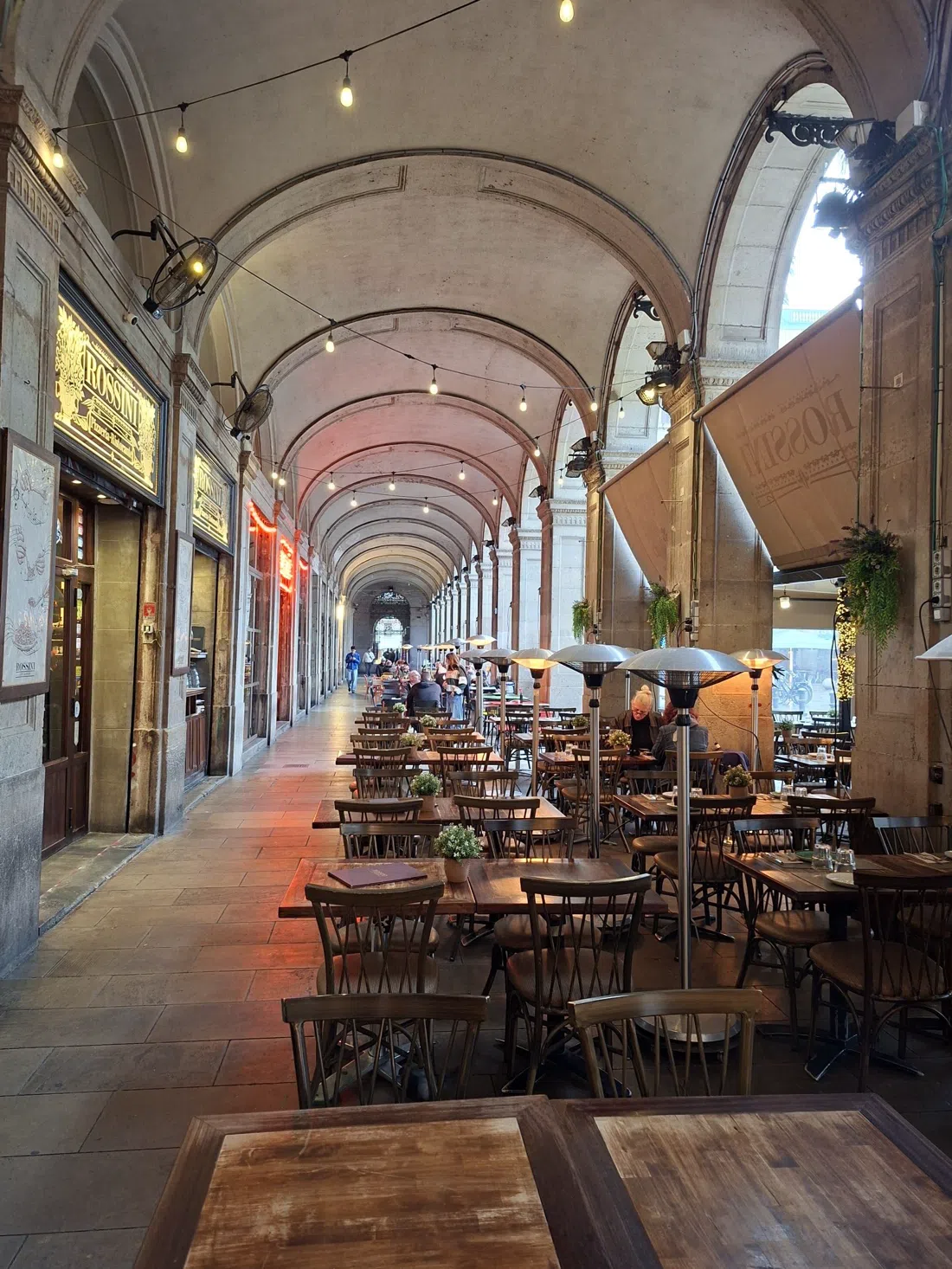
From there it's a short walk or one metro hop to Mercat de Numismàtica i Filatèlia, the Sunday-morning coin-and-stamp market that has occupied Plaça Reial, in the Gothic Quarter, since 1920. The square itself is one of the most photogenic in the city — arcaded, palm-lined, Gaudí lampposts at its centre — and the market is compact enough to browse properly in twenty minutes even in a small group. Entry is free, prices start at €1, and no booking or ticket is needed; you simply turn up before midday, while the surrounding cafés are still setting their morning tables rather than their lunch menus.
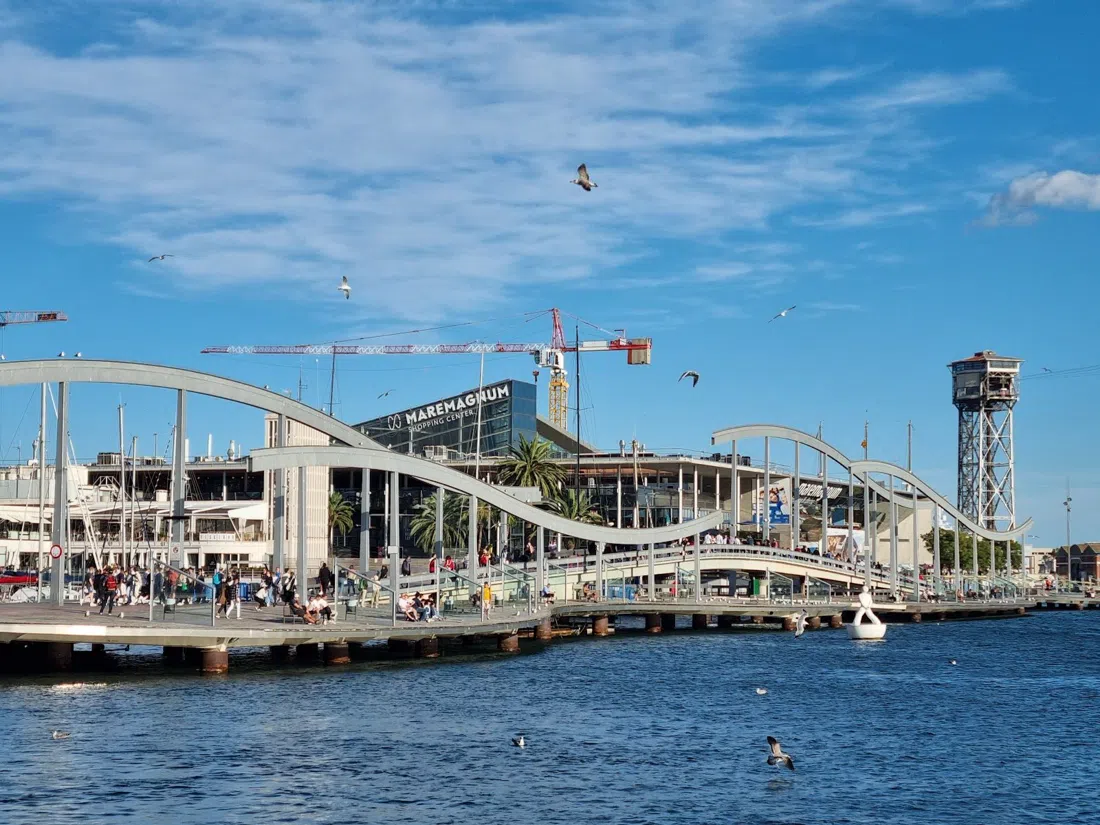
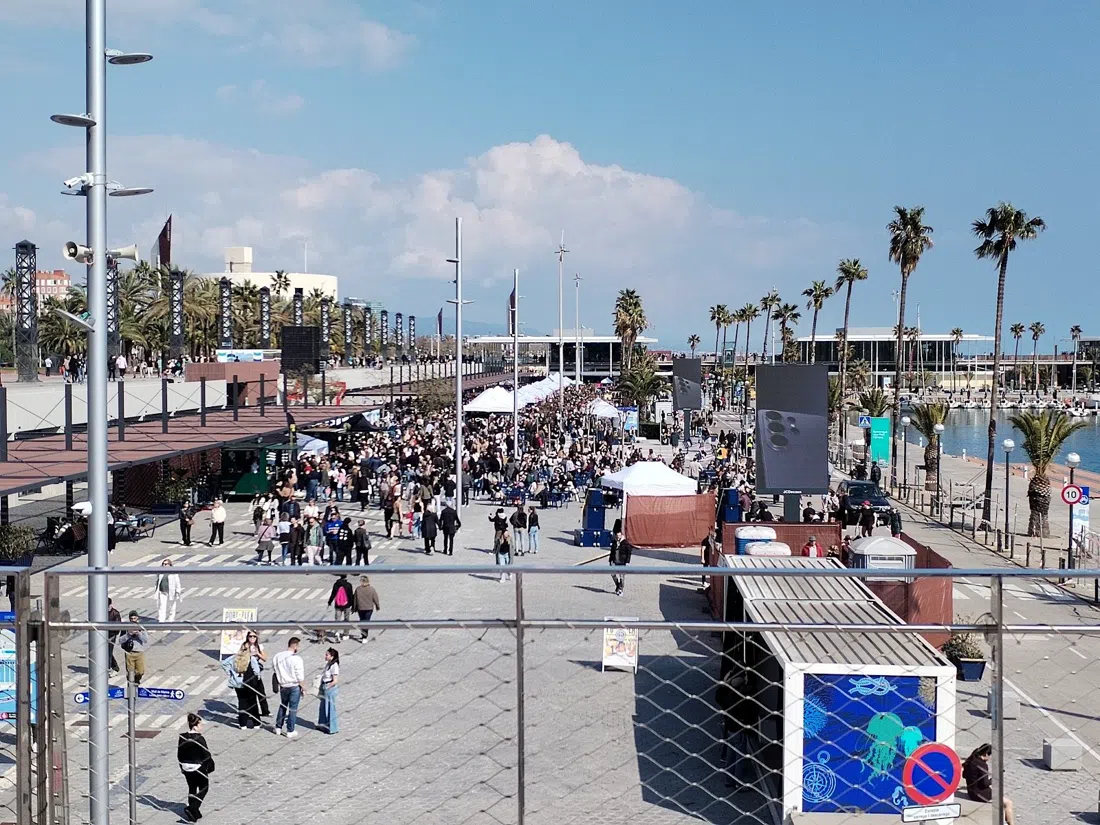
Close the loop at the harbour with Fira de Brocanters del Port Vell, an open-air antiques market strung along the Port Vell promenade. Small collectibles start around €5, entry is free, and the open walkway setting makes it the easiest of the three for a group that's already tired from walking to drift through without committing to buying anything. Its real advantage over its rivals is persistence: it runs every Saturday, Sunday and public holiday, 10am to 8pm, all year, including August, when several of the markets in this piece take the month off entirely.
Walked in sequence — Sant Antoni first, since it winds down earliest, then Plaça Reial, then down to the water for Port Vell in the afternoon — this is a full Sunday, and it's the one day of the week Barcelona's secondhand trade shows itself in full at street level, rather than behind Encants' steel roof.
Beyond Sunday: Mercantic, Riera Baixa and the Design-Market Circuit
Treating Barcelona's secondhand scene as a one-day event undersells it. Five more addresses are worth building a longer trip, or a repeat visit, around.
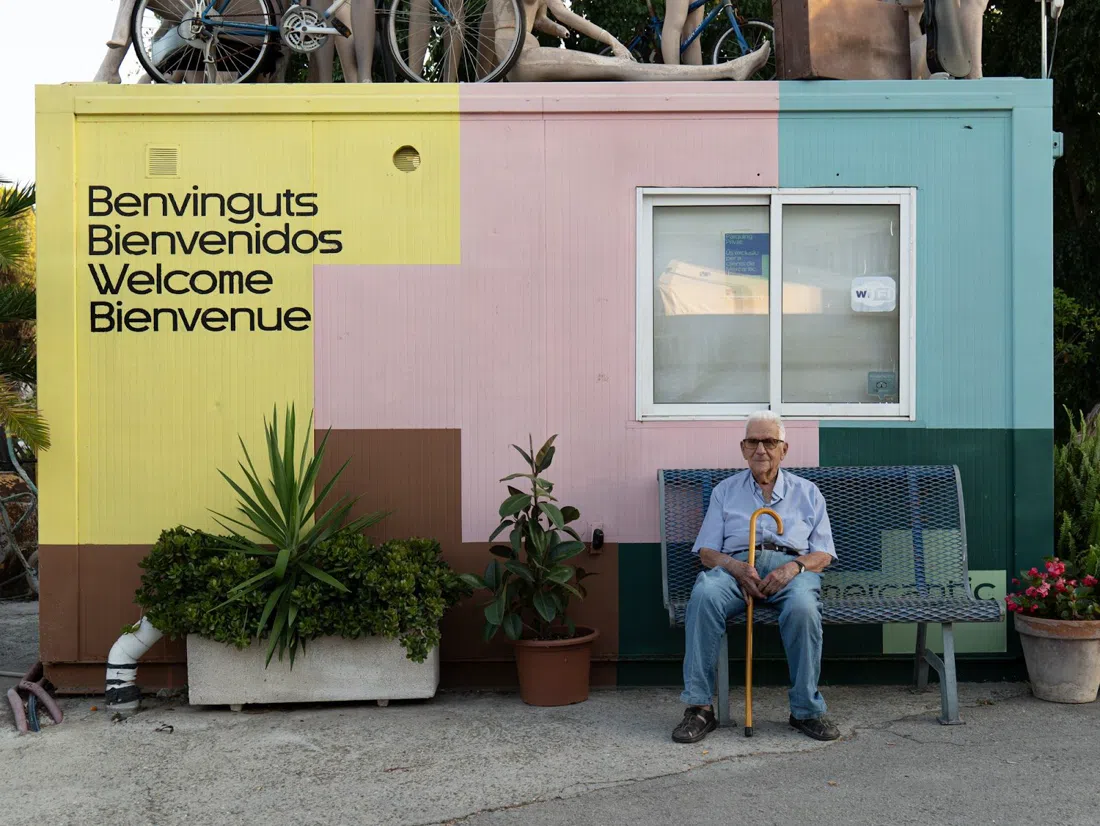
Mercantic — a short train ride outside the city — is the market Encants regulars graduate to once they're after serious furniture rather than a bargain: a vintage-and-antiques village with its own grounds, cafés and enough space that a group can spend half a day there without feeling herded. Its distance from the centre filters out casual browsers and keeps the stock, and the prices, a notch above the city-centre markets — mid-to-high for genuine period furniture and antiques. The date to build a trip around is the first Sunday of the month, when its "Vintage Fest" brings out the fullest programme of stalls.
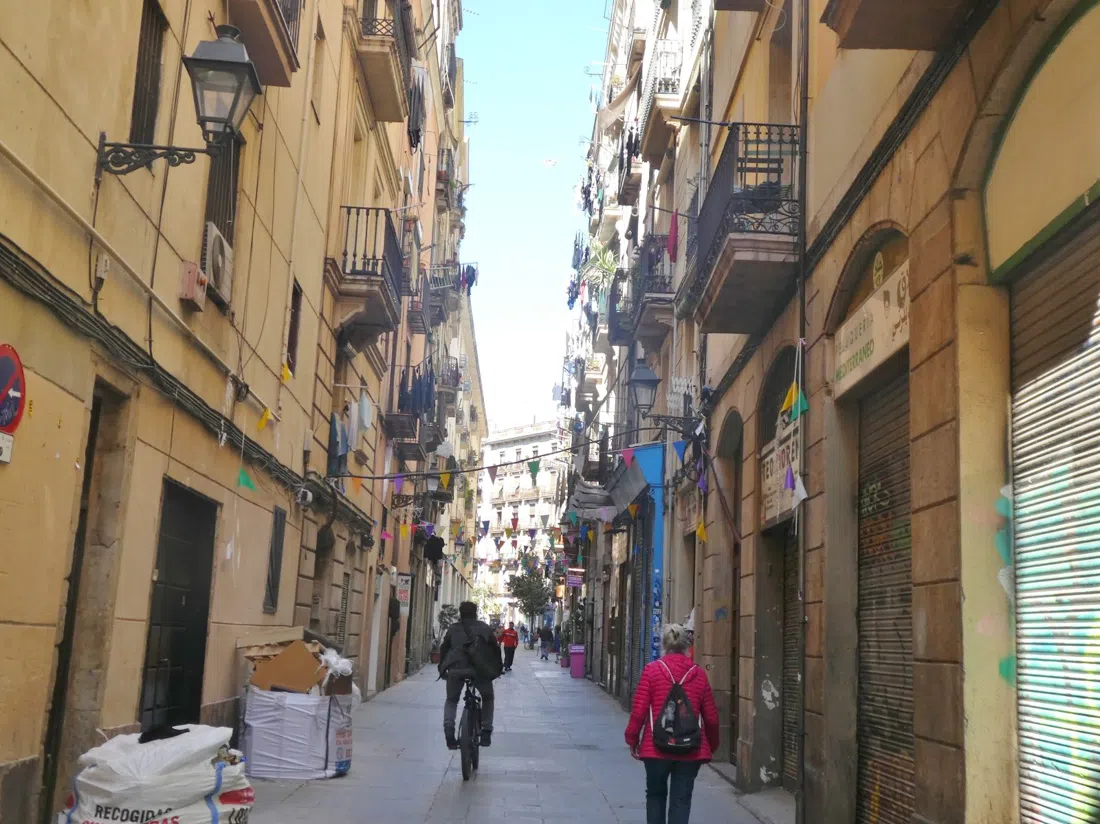
Carrer de la Riera Baixa, in El Raval, is the closest thing Barcelona has to a permanent secondhand district rather than a weekly event: a short street of vintage-clothing shops that spill onto the pavement with impromptu stalls on Saturday afternoons. It suits couples and small groups better than large ones — the shops themselves are narrow, and browsing racks in a party of six inside a space built for two is uncomfortable for everyone, staff included. Expect €10 to €60 a garment; this is curated vintage retail with fair pricing behind it, not a rummage bin, and it should be sold to readers on that basis rather than as a bargain hunt.
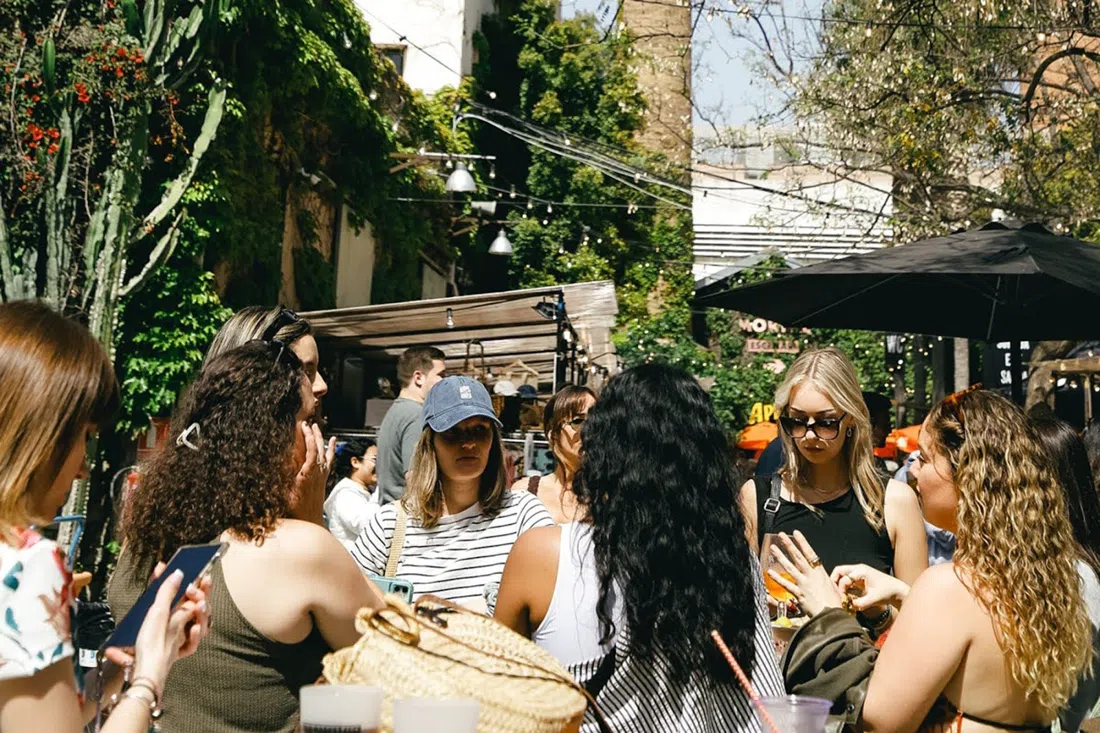
Palo Market Fest, ticketed and dog-friendly, is the design-forward, upcycling-focused answer to Encants' raw junk-hunt, and it's built explicitly for a group day out, with food stalls and music turning it into a half-day event rather than a quick browse. Entry is €6.50, stall prices sit in the mid-range for genuinely designed pieces — this is closer to a curated market than a rastro — and it runs the first weekend of the month except August, with the next 2026 date falling on 5-6 September.
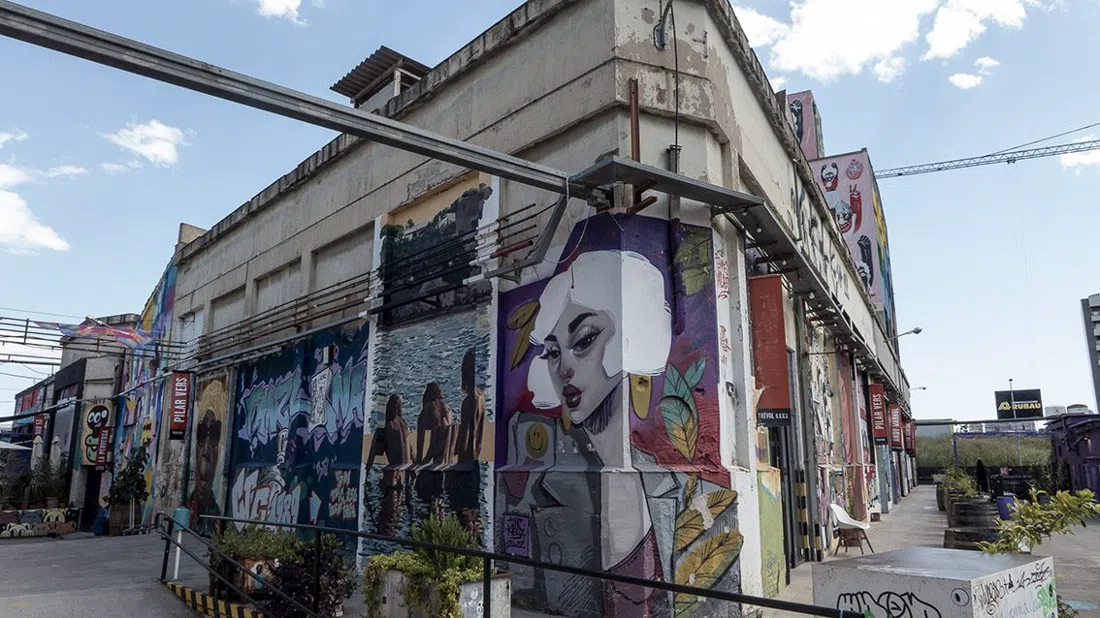
Markets Barcelona — Booom Market, staged weekly on Fridays at Nau Bostik, is the operator's flagship event and the one worth prioritising over their smaller pop-ups elsewhere in the city. It's a warehouse floor with free entry and clothing from €1 to €20, easily large enough to absorb a group without anyone losing each other, and — being a Friday fixture rather than a Sunday one — it's the natural way to open a weekend before the Saturday-Sunday rastro proper begins.
For readers who want Encants' spirit without its price tags or its crowds, Flea Market Barcelona (Fleadonia / El Flea) is the grassroots counterpoint: an outdoor square market with no ticketing, free entry, and stock from €1-2 that leans resale rather than antique. It won't deliver a serious find, but it's the loosest, least commercial stop on this list, and worth flagging to anyone who finds Encants itself a little too polished for what they had in mind.
New Work, Not Resale: Mostra d'Art dels Pintors del Pi
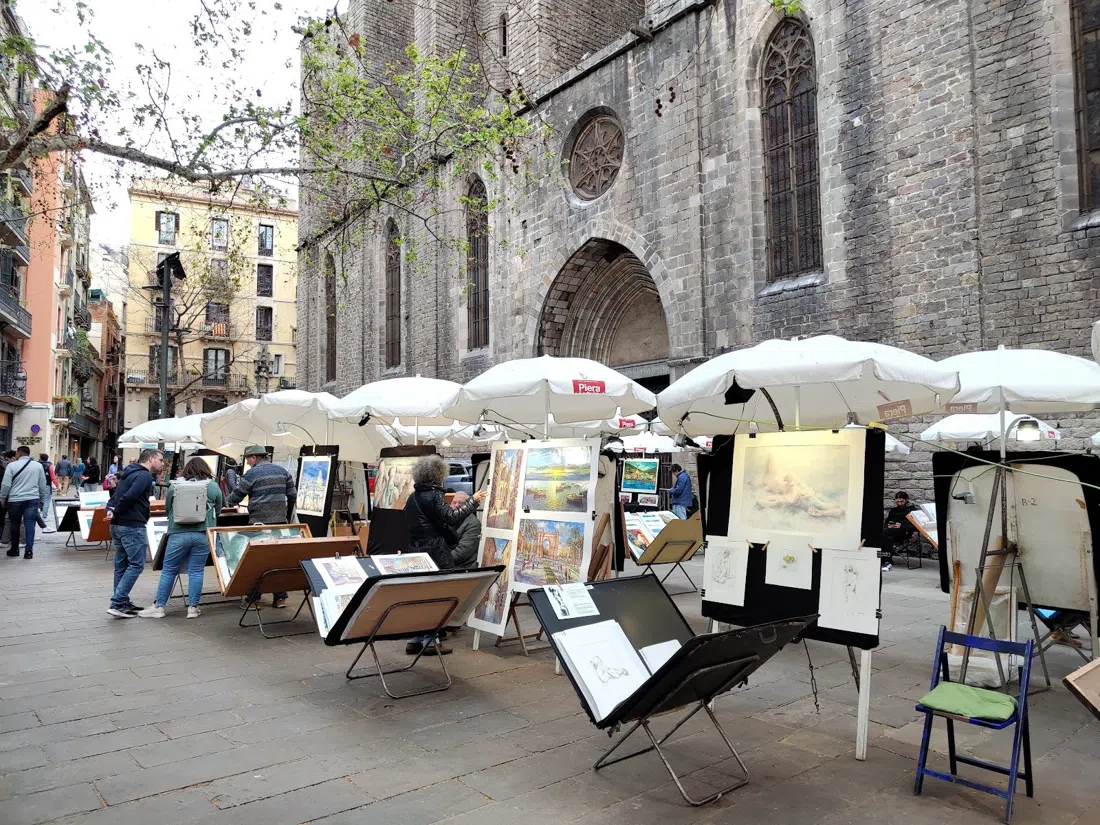
One stop on this route breaks the secondhand rule deliberately. Mostra d'Art dels Pintors del Pi, held in the square outside Santa Maria del Pi in the Gothic Quarter, is Barcelona's oldest running outdoor art market — more than thirty years old — and every piece on sale is new work by the artist standing behind it, priced from €20 into the hundreds for larger canvases. It isn't part of the secondhand trade this piece is otherwise built around, and it shouldn't be sold to readers as one; the honest pitch is that it's the natural last stop after a Gothic Quarter market crawl, with buskers and terrace cafés around the square making it a comfortable place for a group to sit down before deciding whether to walk home with anything.
Getting It Right: Transport, Cash, Timing and Budget
Transport. Els Encants sits directly above Glòries metro station on L1, which is also the easiest orientation point for the whole piece — Sant Antoni's market is on L1/L2, Plaça Reial and Port Vell are both walkable from Drassanes or Liceu, and Riera Baixa and the Pintors del Pi square are within easy walking distance of each other in the Raval/Gothic Quarter core. Mercantic is the exception: budget for a short train journey out of the city and treat it as a separate half-day rather than something bolted onto the Sunday loop.
Cash. Carry it, in small denominations. Sant Antoni's book and coin stalls are cash-only with no exceptions, and most of the smaller markets here — Port Vell, Plaça Reial, Fleadonia — are stallholder-run operations where a card reader is the exception rather than the rule. An ATM stop before you start the loop will save you doubling back for one mid-browse.
Timing. For Encants, arrive before 11am if the mirrored roof is the reason you're going — the light and the crowds both turn against you after that. For the Sunday loop, Sant Antoni and Plaça Reial are morning markets that thin out by early afternoon, while Port Vell runs all day and is the one to save for later. Riera Baixa's street stalls are specifically a Saturday-afternoon phenomenon, not a Sunday one — don't build a Sunday itinerary around it. Palo Market Fest and Mercantic's Vintage Fest both need a first-weekend-of-the-month date circled in advance, and neither runs in August.
Budget. You can spend a full day moving through five or six of these markets on nothing but a coffee and a metro ticket — most have free entry, and the main exception is Palo Market Fest at €6.50. What you spend beyond that is entirely a function of what you're chasing: a few euros for a paperback at Sant Antoni, €10-60 for a jacket on Riera Baixa, or several hundred euros for a piece of furniture worth shipping home from Mercantic, or a genuine antique from Encants itself.
If you're building a longer stay around this loop, it's worth booking centrally — a Barcelona hotel search around Sant Antoni or the Gothic Quarter puts you within walking distance of most of this piece, and the full Barcelona guide covers what to do with the rest of the week once the stalls have packed up.